Most people assume aging means a slow slide toward dependence and decline. That framing is not just discouraging. It is also wrong. What is aging well, really? It is not about defying age or pretending that nothing changes. It is about maintaining the ability to do what matters most in daily life, for as long as possible. The good news is that this is more achievable than most people realize, and it does not require perfection. It requires a few consistent habits, a little support, and knowing where to start.
| Point | Details |
|---|---|
| Aging well is about function | The focus is on maintaining daily independence, not achieving a disease-free body. |
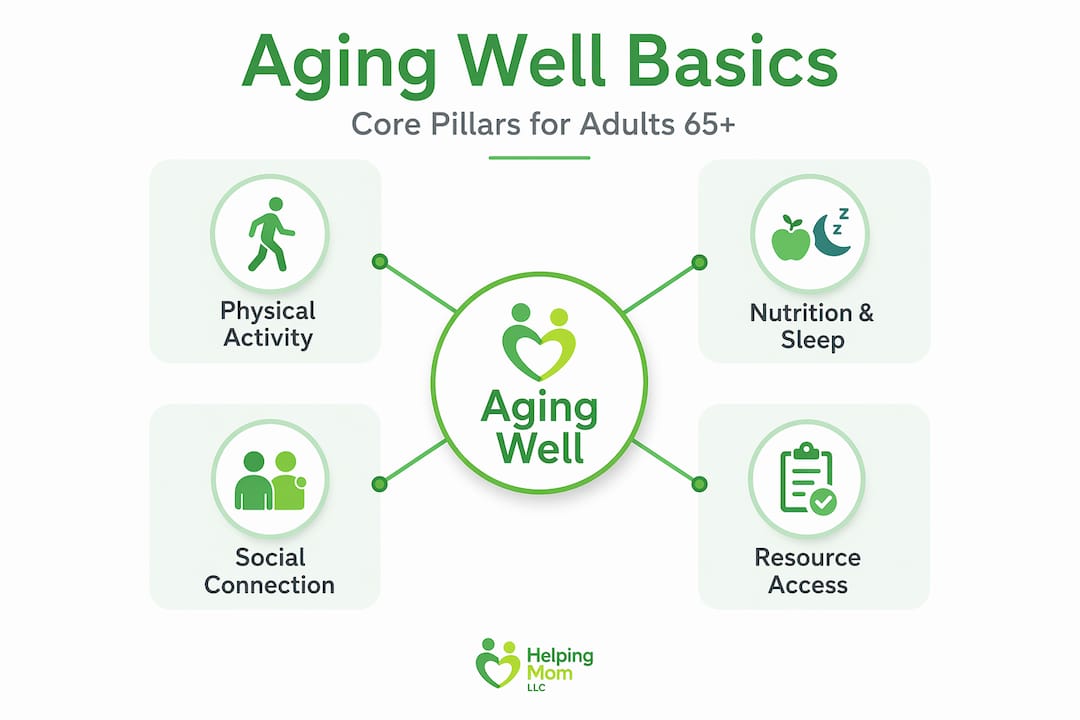
| Physical activity prevents decline | A mix of aerobic, strength, and balance exercises reduces fall risk and preserves mobility. |
| Sleep and nutrition matter deeply | Seven to nine hours of sleep and protein-rich meals directly protect muscle and mental sharpness. |
| Social connection supports health | Staying connected to people reduces isolation risks and supports emotional well-being. |
| Resources shape outcomes | Access to affordable activities and community programs plays a real role in aging well. |
There is a widespread assumption that aging well is about looking younger or avoiding illness entirely. Researchers and clinicians frame it very differently. Researchers often use the terms healthy aging, successful aging, and aging well interchangeably, but all focus on maintaining function, independence, and quality of life as we grow older.
The World Health Organization defines healthy aging as developing and maintaining the functional ability that allows well-being in older age. That definition centers on two things: your intrinsic capacity (strength, mobility, mental function) and the environment around you (your home, your community, your support systems). Together, these shape whether you can live the life you want.
"Healthy ageing is the process of developing and maintaining the functional ability that enables well-being in older age."
— World Health Organization
This framing matters enormously. What does aging well mean in practical terms? It means getting out of a chair without help. It means walking to the mailbox safely. It means remembering an appointment, enjoying a conversation, and sleeping through the night. These are not small things. They are the building blocks of a life lived on your own terms.
For adult children, understanding what aging well looks like can make it easier to support a parent before a crisis develops. Aging well is often less about major medical decisions and more about noticing and protecting the daily habits that help a parent remain independent.
Independence and daily functioning matter far more than the absence of any particular diagnosis. Many people in their 70s and 80s maintain strong daily function across physical health, cognitive sharpness, and social connection, even while managing chronic conditions. Aging well is not perfection. It is capacity.
If there is one habit that cuts across every measure of aging well, it is regular physical activity. Not marathon training. Not gym memberships. Just consistent, appropriate movement.
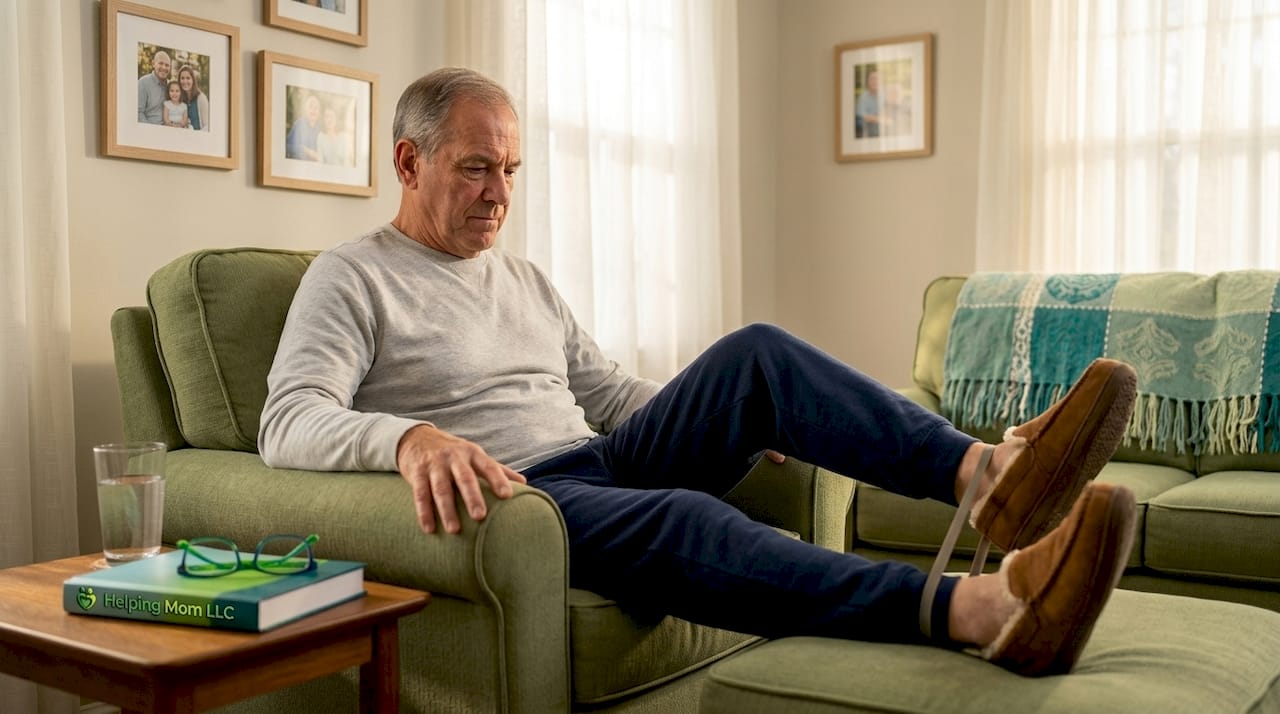
The National Institute on Aging recommends that older adults build toward 150 minutes of moderate aerobic activity per week, muscle-strengthening exercises two days per week, and regular balance activities. These three categories are not interchangeable. Each one addresses a different part of physical function that matters for independence.
Here is how each type helps:
Walking, swimming, dancing — supports heart health, energy levels, and mood. Even a 20-minute daily walk counts.
Chair squats, resistance bands, light weights — protects against muscle loss after 60. Directly affects your ability to carry groceries and climb stairs.
Yoga, standing on one foot, tai chi — reduces fall risk. Falls are the leading cause of serious injury in adults over 65.
Clinical measures of independence often focus on functional outcomes like rising from a chair or climbing stairs. These are not abstract fitness goals. They are the exact movements that determine whether you can live at home safely.
Pro Tip:
If you are just starting out, chair-based exercises are a safe, effective entry point. Seated leg lifts, seated marching, and chair squats build strength and confidence without the risk of balance loss.
If your parent is the one you are supporting, check out Helping Mom's guide on fall prevention at home for practical steps you can take together.
Physical activity does not work in isolation. The habits that support it, particularly what you eat, how you sleep, and how you care for your senses, shape how much energy and resilience you bring to each day.
When it comes to nutrition, the priority for older adults is maintaining muscle mass and steady energy. Protein becomes especially important with age because the body becomes less efficient at processing it. Spreading protein across meals (eggs at breakfast, beans at lunch, fish at dinner) works better than loading it into one sitting. Staying hydrated matters more than many people realize too. Thirst signals become less reliable with age, so building water intake into a daily routine helps.
Here are four foundational habits worth building into daily life:
Eat protein at every meal.
Aim for a fist-sized portion of protein-rich food three times a day to support muscle maintenance and energy.
Stick to a consistent sleep schedule.
Older adults need 7 to 9 hours nightly. Going to bed and waking at the same time, even on weekends, stabilizes your body clock far more than any sleep aid.
Remove sleep disruptors.
The NIA approach to improving sleep quality focuses on reducing caffeine in the afternoon, limiting alcohol, and avoiding screens in the hour before bed. This is behavior design, not medication.
Schedule vision, hearing, and preventive care appointments.
Stanford Medicine highlights that vision and hearing screenings in your 60s and 70s are directly connected to maintaining independence and quality of life into your 80s. Untreated hearing loss, for example, is linked to social withdrawal and faster cognitive decline.
For meal planning ideas that support healthy aging, Helping Mom has a practical guide on meal planning for seniors with realistic options for every budget.
Here is something that does not get said enough: aging well is not purely a matter of personal effort. Resources matter. Access to care matters. Money matters.
Pew Research found that 61% of upper-income older adults rate themselves as aging extremely well, compared to 39% of lower-income adults. That gap reflects real differences in access to healthy food, safe housing, medical care, and social activities.
| Challenge | Practical Approach |
|---|---|
| Limited budget for fitness | Many community centers and YMCAs offer senior-rate programs; free walking groups are widely available |
| Difficulty accessing care | Medicare covers many preventive services; local Area Agencies on Aging can help navigate coverage |
| Social isolation | Libraries, faith organizations, and senior centers often provide free programming and transport |
| Home safety concerns | A basic home safety review can significantly reduce fall risk at low or no cost |
Aging well strategies must include resource navigation, not just willpower. If you are an adult child supporting a parent, part of your role is knowing what programs exist and helping connect your parent to them. That is genuinely useful support.
Pro Tip:
Search for your local "Area Agency on Aging" online. These federally funded agencies provide free guidance on everything from meal delivery to transportation to legal aid for older adults.
When I think about the families I have worked alongside through Helping Mom, the ones who feel most settled about aging well are not the ones chasing perfection. They are the ones who have identified what daily independence looks like for them specifically, and then quietly built habits around protecting it.
I have seen people in their late 70s pick up walking for the first time after a health scare and genuinely transform their confidence over six months. I have also seen people with access to every resource imaginable struggle because no one in their life named what was happening clearly and offered a calm, practical next step.
What I have learned is this: aging well is rarely about one big change. It is about small, repeatable actions that accumulate. A consistent sleep window. A Wednesday morning walk. A weekly call with someone you care about. These things matter more than any single intervention.
I also want to say something about fear. Many older adults and their families approach aging as something to dread. But the research, and the real-life experience of many people in their 70s, 80s, and beyond, tells a different story. Functional ability can be maintained and sometimes improved well into later life. Isolation can be addressed. Resources can be found. You do not have to do all of this at once. You just have to start somewhere.
If you are reading this as an adult child, walking alongside a parent through this stage, know that your calm presence and practical support matter enormously. You do not need to have all the answers. You just need to keep showing up.
— Mike
If this article sparked some practical questions about what aging well looks like at home, Helping Mom has resources built specifically for this. Whether you are an older adult thinking about your own setup or an adult child supporting a parent, the practical side of aging in place matters as much as any lifestyle habit.
Walk through the most common home hazards and how to address them without a major renovation.
Read GuideA useful place to spend twenty minutes. Small changes to lighting, flooring, and bathroom setup make a real difference.
View ChecklistAging well is not about staying young. It is about maintaining independence, dignity, safety, and connection for as long as possible. Whether you are planning for yourself or helping a parent, small practical steps taken today can make a meaningful difference tomorrow.
Aging well means maintaining the ability to do what matters most in daily life, including moving safely, thinking clearly, and staying connected to others. It is defined by functional independence, not the absence of illness.
Key signs include staying physically active, sleeping consistently, maintaining social relationships, managing chronic conditions effectively, and feeling a sense of purpose. These indicators appear across physical, mental, and social dimensions.
Regular movement, especially a combination of aerobic activity, strength training, and balance work, protects muscle mass, reduces fall risk, and supports daily tasks like getting out of a chair or climbing stairs.
Yes. Research shows that higher income correlates with better self-reported aging outcomes, largely because of better access to care, healthy food, safe housing, and social activities. Navigating available community resources can help close that gap.
Older adults need 7 to 9 hours of sleep per night. The most effective approach focuses on keeping a consistent sleep and wake time and removing disruptors like screens, caffeine, and alcohol before bed.
Learn what aging in place really means and how to make it work safely for your loved ones.
Practical, no-overhaul safety improvements that make a real difference at home.
A practical overview for family caregivers navigating the aging-in-place journey.
Everything you need to support your parent's independence at home, all in one place.

Use this simple checklist to reflect on the key areas that support healthy aging. Check each statement that applies to you (or your parent).
I move my body most days of the week.
I can safely perform my daily activities.
I maintain regular contact with family or friends.
I get routine vision, hearing, and medical checkups.
I sleep consistently and wake feeling rested.
I have activities that give me purpose and enjoyment.
My home supports my safety and independence.
If you answered "no" to several of these:
Choose one area to improve this month. Small changes often create meaningful results over time. For adult children supporting a parent, this checklist can also serve as a gentle conversation starter — a way to explore together what might need attention, without making anyone feel scrutinized.
Social Connection, Mental Health, and Staying Sharp
Physical health gets most of the attention in conversations about aging well. But the connection between social well-being and quality of life is just as significant, and often more immediate in how it feels day to day.
Isolation is a genuine health risk for older adults. Not just an emotional one. Chronic loneliness is associated with higher rates of cognitive decline, depression, and even physical illness. The absence of regular human connection can quietly erode the confidence and motivation that make other healthy habits sustainable. If your own parent seems to be pulling away from social activities, Helping Mom's guide on helping an isolated elderly parent feel connected walks through practical ways to gently rebuild those connections.
Here are practical ways to stay connected and mentally engaged:
Positive attitude and emotional resilience are also recognized signs of aging well. People who can adapt to change, find meaning in small moments, and maintain a sense of humor about the harder parts of getting older tend to report much higher satisfaction with their lives. That is not a personality type. It is a practiced skill.
If you are concerned about memory changes alongside these shifts, Helping Mom's resource on cognitive changes in older adults offers calm, practical guidance for families.