Discover how to help your isolated elderly parent feel connected with simple, actionable steps to improve their well-being and happiness.
Helping-mom
Caregiving Resource
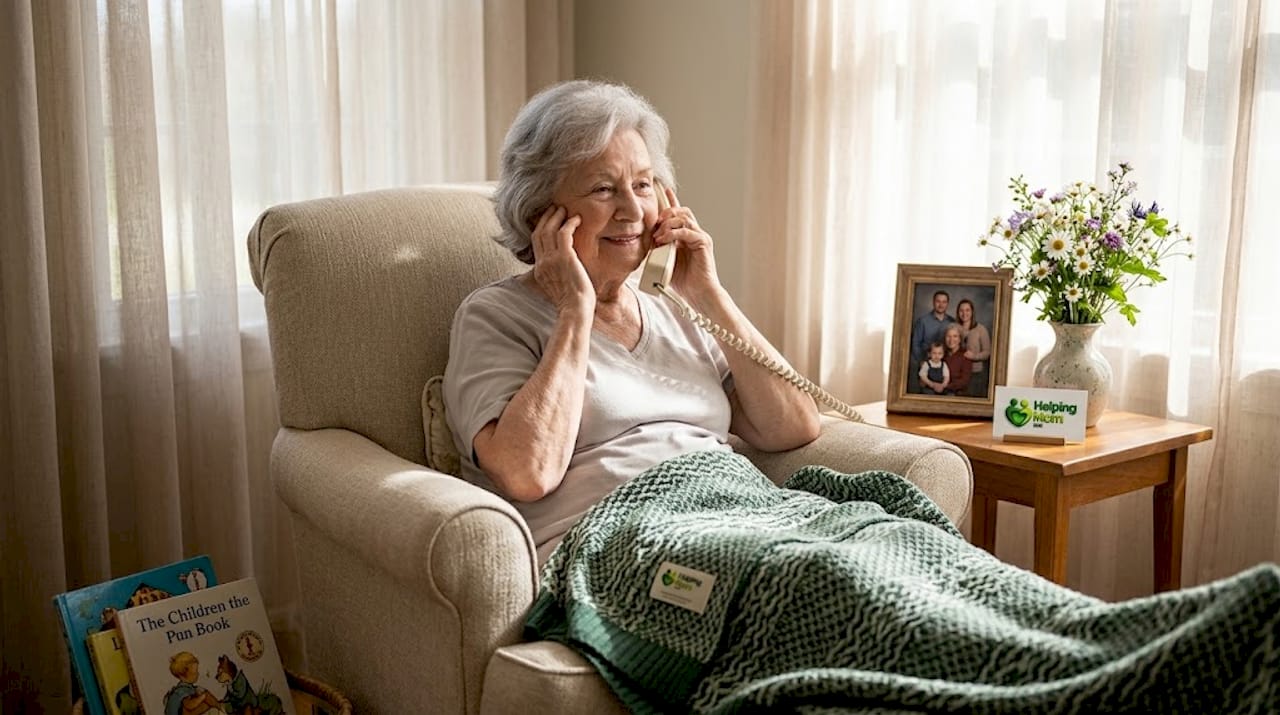
If you've noticed your mom or dad seems quieter lately, less interested in plans, or spending more time alone, you're not imagining it. Knowing how to help an isolated aging parent is one of the most common challenges adult children face, yet it often goes unaddressed for months or years. One-third of adults 45 and older report feeling lonely, and many never say a word about it. The good news is that you do not need to overhaul your parent's life to make a meaningful difference. Small, consistent steps can make a meaningful difference, and this guide will show you exactly where to start.
Many adult children assume loneliness only becomes a concern after a major health event or loss. In reality, isolation often builds quietly over time. A parent may still seem "fine" on the surface while their world gradually becomes smaller and quieter week after week. Recognizing the early signs of loneliness in seniors gives you the chance to step in gently, before the silence becomes the new normal.
| Point | Details |
|---|---|
| Isolation is often hidden | Many elderly parents won't volunteer that they're lonely, so look for behavioral shifts rather than waiting for them to ask for help. |
| Start with conversation, not solutions | Approach your parent with curiosity and empathy before suggesting changes, so they feel heard rather than managed. |
| Routine contact beats occasional visits | Regular, scheduled connection, whether a weekly call or a standing Sunday lunch, reduces loneliness more than sporadic check-ins. |
| Barriers are real and solvable | Hearing loss, mobility issues, and transportation gaps are common obstacles, and each one has a practical workaround. |
| Small steps compound over time | One new social touchpoint per week is more sustainable than overhauling your parent's entire routine at once. |
Before you can help, you need to know what you're looking at. Loneliness in older adults rarely announces itself. Your parent is unlikely to say, "I feel isolated." More often, you'll notice something subtler. A shift in energy. Less interest in topics they used to love. Shorter phone calls. A house that feels a little too quiet.
Here are the most common signs worth paying attention to:
Some signs of senior loneliness are easy to overlook because they look like small daily habits rather than cries for help. If your elderly parent feels lonely, you may notice these quieter signals long before they say anything directly:
The causes behind these signs are worth understanding too. Most elderly parents don't choose isolation. They experience it because their world gradually shrinks. Friends pass away or move. Driving becomes difficult. Hearing loss makes group conversations exhausting. Mobility challenges make leaving the house feel like a production. Each of these losses compounds quietly, and before long, a once-social person is spending most days alone without quite knowing how it happened.
Understanding what's driving the isolation helps you respond to the actual problem, not just the surface behavior. That's where supporting elderly parents effectively begins.
One of the most common mistakes well-meaning adult children make is jumping straight to solutions before their parent feels understood. If you arrive with a list of suggestions, your parent may feel criticized or managed rather than cared for. That reaction often leads to resistance, which makes everything harder.
A better approach is to lead with observation and curiosity. Try something like, "I've noticed you seem a little quieter lately. How have you been feeling?" Give them room to answer. Don't rush to fill the silence. Your goal in this first conversation isn't to fix anything. It's to understand what they're experiencing and what they actually want.
Once the conversation opens up, you can move into gentle planning together. Framing offers with small, manageable steps preserves autonomy and helps maintain the trust you need to make any of this work. Ask what they miss. Ask what would feel good. Let their answers guide the direction.
A few things to keep in mind as you plan:
Pro Tip
When your parent resists a suggestion, don't push harder. Try asking, "What would make that feel easier?" Often the barrier is something practical and solvable, not a true objection to the idea itself.
Helping Mom has a helpful piece on how to help without upsetting them if you want more guidance on keeping these conversations productive and respectful.
This is where the real work happens, and where most families underestimate what's required. Connecting with isolated seniors isn't just about finding activities. It's about building a system of regular, low-friction contact that shows up week after week without depending on motivation or perfect circumstances.
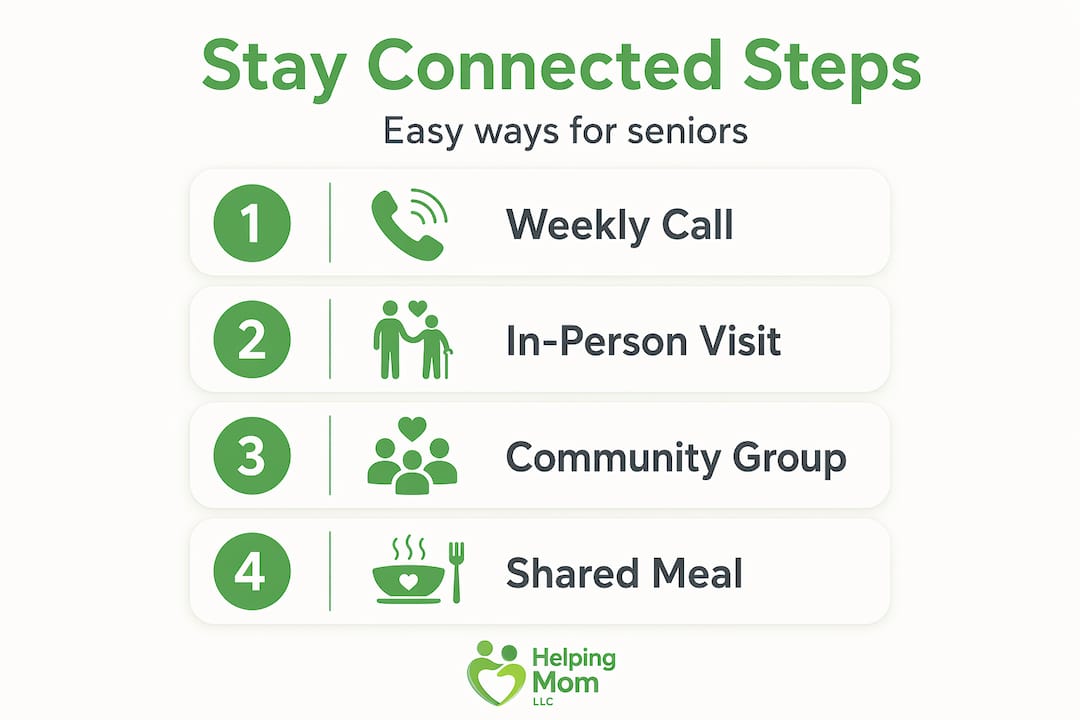
Loneliness improves most with sustained, repeatable relationships rather than one-off visits or occasional outings. That's a meaningful distinction. A single Sunday dinner, however warm, does less than a standing weekly check-in call that your parent can count on.
Here's a practical sequence for building that system:
| Connection type | Frequency | Best for |
|---|---|---|
| Weekly family phone or video call | Once a week | Emotional check-in and maintaining closeness |
| Community senior program | 1 to 2 times per week | Structured social time and shared activities |
| Volunteer befriending visit | Weekly or biweekly | One-on-one companionship matched by interest |
| Outings with family | Monthly or more | Shared experiences and breaking routine |
When it comes to helping older parents stay socially connected through technology, the right tool is the one your parent will actually use. Here are concrete ideas that families tell us work in real life:
Pro Tip
When introducing tech for connecting with elderly parents, keep it simple. A tablet with one app and a single bookmarked video call contact is far more likely to get used than a device loaded with options they find confusing. Set it up together, practice once, and leave a handwritten instruction card nearby.
Transportation is often the quiet obstacle that unravels even the best social plan. Transportation and scheduling are critical to turning social plans into real participation. Look into local ride programs for seniors, volunteer driver services, or community transit options. Helping Mom's guide on senior transportation options is a practical place to start.
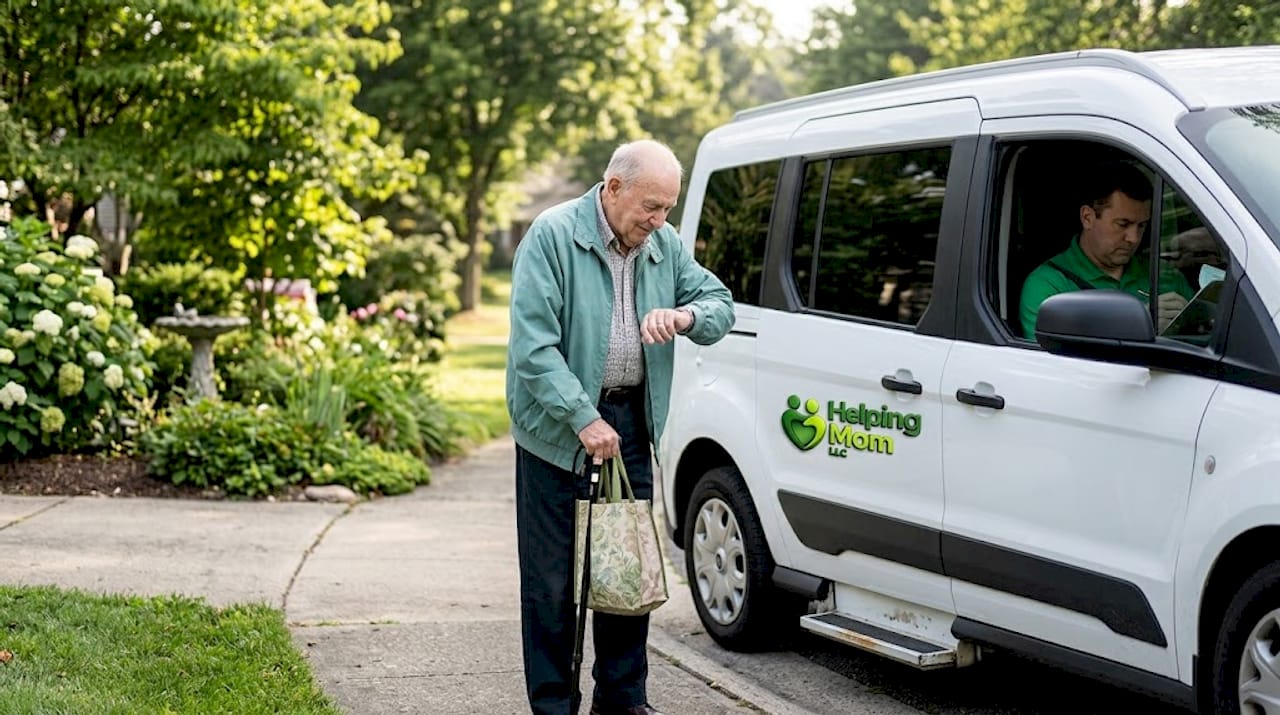
Even with the best plan in place, real obstacles get in the way. Three of the most common ones are reduced mobility, sensory challenges like hearing and vision loss, and a parent who simply doesn't want to engage.
Hearing loss deserves special attention here. Many families assume their parent is becoming antisocial when the actual problem is that conversation has become exhausting. Group settings with multiple voices and background noise are particularly hard. Hearing aids significantly reduce loneliness by improving social engagement in older adults. If your parent hasn't had a hearing assessment recently, that's one of the most impactful things you can encourage.
Other barriers worth addressing directly:
When your parent resists your efforts, shifting from persuasion to partnership is the most effective move you can make. Instead of explaining why something is good for them, ask what small version of it might feel manageable. Instead of pushing a group activity they dislike, offer two alternatives and let them choose. Autonomy preserved is cooperation gained.
If you're finding this stage particularly challenging, a professional caregiver or a social prescribing link worker can sometimes open doors that family members can't, simply because the relationship dynamic is different.
The space your parent lives in sends a constant message about whether life still holds warmth and meaning. Small environmental adjustments can shift that message in a positive direction without requiring a renovation or a major investment.
Consider what's visible and within reach. Family photos on the walls and shelves, a favorite playlist playing softly in the afternoon, art supplies or a puzzle on the table. These aren't decorative afterthoughts. They are prompts for engagement and memory that make a home feel alive rather than just functional.
Shared meals are one of the most powerful and underused tools for reducing isolation. Eating together, even occasionally, creates a relaxed space for conversation that doesn't require effort or planning. If you can't be there in person, a video call during a meal can work surprisingly well.
Pet companionship is worth mentioning too. For parents who are able to care for an animal, even a low-maintenance one, pets provide daily physical contact, routine, and a gentle sense of purpose.
| Approach | Low-effort version | More involved version |
|---|---|---|
| Home environment | Add a few family photos and a simple plant | Rearrange space to feel warmer and more inviting |
| Shared activity | Watch a favorite show together over video call | Visit for a cooking or crafting session in person |
| Pet companionship | Encourage a neighbor's pet to visit | Help your parent adopt a cat or small dog |
| Music and memory | Set up a playlist they love | Attend a live music event together |
The goal isn't perfection. It's gentle consistency. Check in on what's working, adjust what isn't, and stay curious about what your parent actually enjoys rather than what you think they should enjoy.
Most families come to this with the best intentions and still struggle — not because they didn't try hard enough, but because they went looking for a single solution when what their parent actually needed was a rhythm.
The families who make the most progress aren't the ones who find the perfect senior program or the most sophisticated technology. They're the ones who show up on the same day every week, who call on Tuesday afternoons, who bring lunch on the first Sunday of the month. That predictability does something that no single gesture can. It tells an isolated aging parent that they are expected — that someone is organizing their week around them, and that their presence in the world is not optional.
The emotional side of this is real for you too. Watching a parent you love withdraw from life is painful. It's easy to feel guilty, frustrated, or helpless. Those feelings are normal. You don't have to resolve them before you can help. You just have to take the next small step.
What we've seen help families most is this: building support for a parent aging alone with a clear, consistent plan rather than just good intentions. The plan doesn't need to be complicated. It needs to be consistent. A family meeting to share the load, a safer home setup, and a standing weekly call together can do more than a dozen scattered efforts.
The Power of Small, Consistent Connection
You do not have to rebuild your parent's entire social world overnight. Sometimes connection begins with one standing phone call, one shared meal, or one small weekly routine that reminds someone they still matter deeply to the people around them.
At Helping-mom, we believe that a safe, well-arranged home is part of the foundation for social wellbeing. When your parent feels physically secure at home, they're more likely to have the confidence and energy to engage with the world outside it. Our home safety guide for seniors walks through the practical changes that make the biggest difference, from fall prevention to lighting adjustments and medication organization, all without overwhelming you with a to-do list the size of a renovation project.
If you're working through the broader picture of keeping your parent comfortable, independent, and connected, our how to care for aging parents library covers everything from transportation for seniors to caregiver burnout — calm, practical guidance at every stage.
You do not have to rebuild your parent's entire social world overnight. Sometimes connection begins with one standing phone call, one shared meal, or one small weekly routine that reminds someone they still matter deeply to the people around them.
Explore more caregiving guides from Helping Mom
Keeping conversations productive and respectful
Recognizing the right time for a transition
A compassionate approach to caregiving challenges
Calm, practical guidance for every stage
