Discover practical strategies for effective medication management for seniors. Ensure your loved ones take their medications safely and on time.
Helping-mom
Caregiving Resource Team

TL;DR:
Medical Disclaimer: This guide is educational and is not a substitute for medical advice. Always consult your parent's physician or pharmacist before making medication changes.
Medication management for seniors is the organized process of ensuring older adults take the right medications, at the right times, in the right doses. When this process breaks down, the consequences are serious. Poor medication adherence contributes to roughly 125,000 deaths per year in the United States. That is one death every four minutes. Nearly 90% of adults over age 65 take at least one prescription medication, and many take five or more, making medication management one of the most important parts of aging safely. Tools like the Medisafe app, a simple pills organizer for seniors, and regular pharmacist check-ins can close that gap. This guide gives you practical, relationship-preserving strategies to support your parent's safety without turning every conversation into a confrontation.
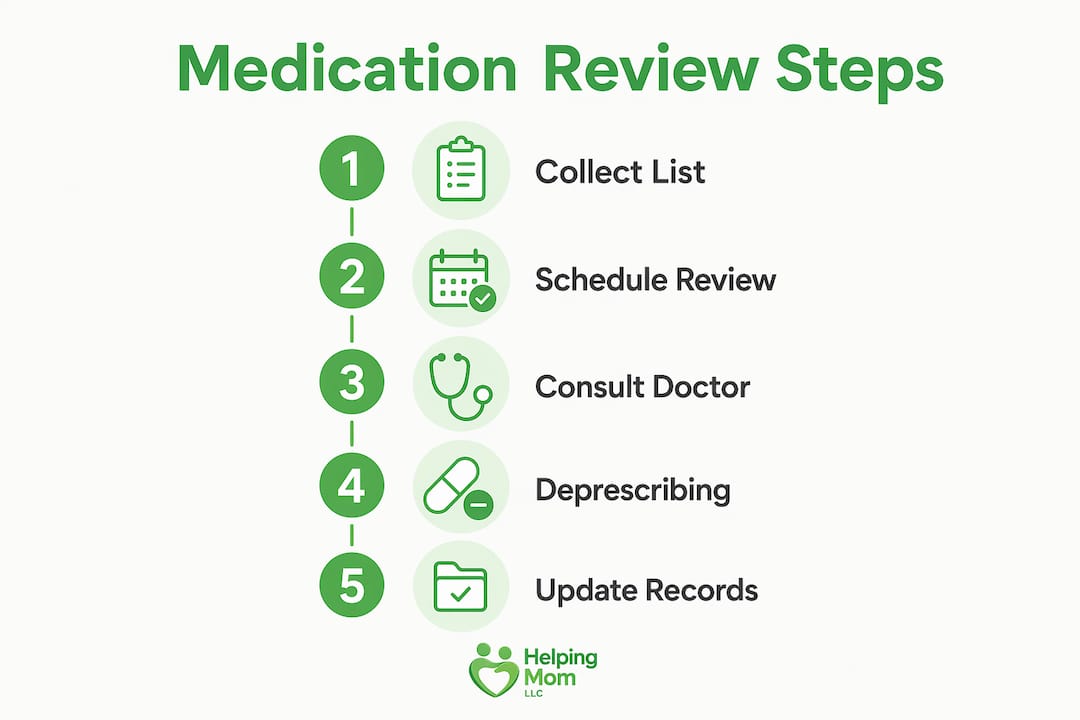
Aging changes how the body processes drugs. Kidneys slow down. Liver function shifts. A dose that worked at 55 may cause problems at 72. This is why polypharmacy risks increase significantly by age 60, raising the chances of oversedation, falls, and dangerous drug interactions.
The formal term for what you are doing as a caregiver is medication therapy management, or MTM. It is the same framework pharmacists and physicians use. You do not need a medical degree to apply it. You need a system, a good relationship with your parent's care team, and a clear picture of everything they are taking.
One thing most caregivers miss: supplements. Seniors often take supplements that they never mention to their doctor. Fish oil, melatonin, turmeric, and herbal teas all interact with prescription drugs. That "shadow" medicine list is just as important as the official one.
Experts recommend a comprehensive medication review at least every 12 months and after any major health event, such as a hospitalization, a fall, or a new diagnosis. That timing matters because your parent's needs shift. A medication prescribed after a hip replacement may no longer be necessary two years later.
Here is what a good medication review covers:
Current prescriptions
Every drug, dose, and prescribing doctor
OTC medications
Pain relievers, antacids, sleep aids
Supplements & vitamins
Including anything from health food stores
Recent side effects
Dizziness, confusion, constipation, sleep changes
Duplicate therapies
Two drugs doing the same job from different doctors
One concept worth knowing is deprescribing. It means safely reducing or stopping medications that are no longer needed or that cause more harm than good. Deprescribing often improves quality of life by cutting side effects and simplifying daily routines. Ask your parent's doctor directly: "Is there anything on this list we could safely stop?"
Medicare's Part D drug coverage may include a free Medication Therapy Management program for eligible seniors. Eligibility depends on the specific plan, so it is worth calling the plan directly to ask. This program pairs your parent with a pharmacist for a full medication review at no extra cost.
Pro Tip:
Bring a printed medication list to every doctor's appointment. Include drug names, doses, and the reason each one was prescribed. This single habit prevents duplicate prescriptions and catches interactions before they happen.
Use Helping-mom's medication schedule template to build and maintain that list between appointments.
Every hospital discharge should include a medication reconciliation—a careful comparison between the medications taken before hospitalization and the medications prescribed afterward. This process catches duplicate prescriptions, discontinued medications that accidentally continue, and new drug interactions that could cause serious harm.
Medication errors during transitions of care are among the most common and preventable causes of patient harm. When a parent moves from hospital to home, from one care facility to another, or even from one doctor to a new specialist, medications can get lost in the handoff. A thorough medication reconciliation closes those gaps before they become emergencies.
The first week after a hospital discharge is when medication errors and adverse drug events are most likely to occur. Here is a practical caregiver medication checklist for those critical first days:
Bring every medication home
Gather all prescription bottles, vitamins, supplements, eye drops, creams, inhalers, and over-the-counter medicines—everything your parent takes. Many drug interactions in seniors are discovered only when every product is reviewed together.
Compare discharge paperwork to the previous medication list
Go line by line. Look for medications that were stopped, doses that changed, and new prescriptions that were added. If something does not match what you expected, flag it immediately.
Confirm which medications were stopped
Some medications are intentionally discontinued during a hospital stay. Make sure you know which ones should stay stopped and which ones should resume. Never assume—ask the discharge nurse or pharmacist directly.
Schedule a follow-up with the primary care provider
Book this appointment before leaving the hospital if possible. The primary care doctor needs the full discharge summary to coordinate ongoing prescription management. Aim for a follow-up within 7 days of discharge.
Watch closely for new side effects during the first week
New medications or dose changes can cause dizziness, confusion, nausea, or fatigue. Log any changes and report concerning symptoms to the doctor promptly. Early intervention prevents a second hospitalization.
Bring Every Medication to Appointments
Don't rely on memory. Bring the actual bottles and packages.
A reliable medication system beats relying on memory every time. The goal is to make taking medications correctly the path of least resistance for your parent.
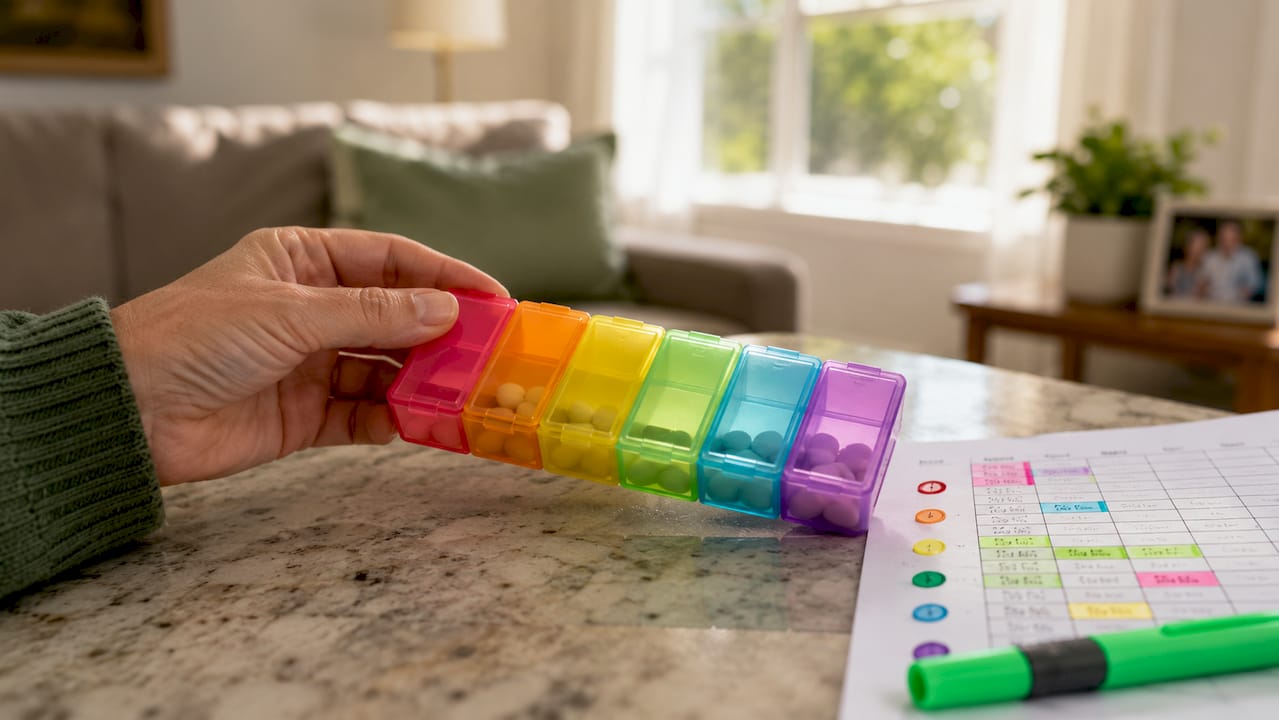
Start with a single document that lists every prescription, over-the-counter drug, and supplement. Include the dose, the prescribing doctor, and the reason it was prescribed. Update it after every appointment. This list travels to every medical visit, every ER trip, and every pharmacy.
Weekly pill organizer
A basic seven-day pill organizer with AM and PM compartments is still one of the most reliable tools available. It gives both you and your parent a visual check at a glance.
Smart pillbox
Devices with built-in alarms and sensors go one step further. Physical verification using smart pillboxes is more reliable than digital reminders alone. Seeing an empty compartment confirms the dose was taken.
Medication reminder apps
The Medisafe app sends alerts, tracks doses, and flags potential drug interactions. It also lets a family member receive a notification if a dose is missed.
Printed medication log
A printed medication log kept near the pill organizer works well for parents who prefer low-tech solutions. Log the time each dose is taken and any side effects noticed.
Use One Pharmacy Whenever Possible
Using a single pharmacy for all prescriptions lets the pharmacist monitor the full picture. Splitting prescriptions across multiple pharmacies creates blind spots for interactions.
Pro Tip:
If your parent uses a smart pillbox, check the sensor log weekly rather than calling to ask if they took their pills. It gives you the information you need without making them feel watched.
| Method | Best for | Limitation |
|---|---|---|
| Weekly pill organizer | Visual confirmation, low cost | No alert if dose is skipped |
| Medisafe app | Remote monitoring, interaction alerts | Requires smartphone comfort |
| Smart pillbox with sensors | Passive verification, caregiver alerts | Higher upfront cost |
| Printed log | Low-tech households | Relies on self-reporting |
Senior medication safety requires watching for a specific set of risks that do not apply the same way to younger adults. Older bodies process drugs more slowly, which means side effects hit harder and last longer.
Common warning signs to watch for:
The Beers Criteria is a list maintained by the American Geriatrics Society that identifies medications considered high-risk for adults over 65. Pharmacists can answer questions about Beers Criteria drugs and flag whether your parent is taking any of them. This is not a reason to panic. It is a reason to have a conversation with the prescribing doctor.
Storage and expiration dates matter more than most caregivers realize. Medications stored in humid bathrooms or warm kitchens degrade faster. A cool, dry location away from direct light is the right spot. Check expiration dates every six months and dispose of outdated medications through a local pharmacy take-back program.
| Safety concern | Practical step |
|---|---|
| Dizziness or falls | Ask doctor to review blood pressure medications |
| Cognitive changes | Check for anticholinergic drugs on the Beers Criteria list |
| Missed doses | Switch to a smart pillbox with caregiver alerts |
| Drug interactions | Use one pharmacy for all prescriptions |
| Expired medications | Schedule a biannual medicine cabinet review |
The way you talk about medications shapes whether your parent stays honest with you and their care team. Framing missed doses as problem-solving rather than failure keeps the conversation open. When your parent feels judged, they stop telling you the truth. That is when real safety risks develop.
A few approaches that work well:
Ask open questions.
"How has the new blood pressure pill been feeling?" lands better than "Did you take your medication today?"
Involve your parent in decisions.
When they understand why a medication matters, they are more likely to take it consistently.
Use a shared log.
A shared daily medication log with a weekly check-in reduces the need for repeated reminders. One summary conversation per week replaces daily friction.
Bring questions to the pharmacist.
Pharmacists are underused experts in most families' care plans. They can explain drug-food interactions, timing questions, and side effect concerns in plain language.
Loop in siblings.
If you share caregiving with a brother or sister, use a printed caregiver schedule to coordinate who handles which medication tasks. Consistent handoffs prevent missed doses.
For families managing care from a distance, a single daily summary report works better than multiple check-in calls. Long-distance caregivers who switch to one weekly review conversation report less stress and less friction with their parents. That is a meaningful shift for everyone involved.
Effective medication management for seniors requires a complete medication list, regular professional reviews, reliable physical tracking tools, and open communication.
Annual reviews are non-negotiable
Schedule a full medication review every 12 months and after any hospitalization.
Supplements belong on the list
Include all vitamins and over-the-counter products to prevent hidden drug interactions.
Physical verification beats reminders
Smart pillboxes and weekly organizers confirm doses were taken, not just scheduled.
Pharmacists are free experts
Ask your pharmacist about Beers Criteria risks, interactions, and timing questions.
One conversation beats daily nagging
A shared weekly medication log reduces friction and keeps communication honest.
Through years of working with families supporting aging parents, I have seen many people come to medication management only after a preventable crisis—a fall, an unexpected hospitalization, or a medication interaction that no one realized was possible. A parent ends up in the ER after a fall, and the family discovers she was taking a sleep aid that interacted with her blood pressure medication. Nobody knew because nobody had asked about the sleep aid. It was over-the-counter, so it did not feel like a "real" medication.
That experience taught me something I now believe firmly: the medication list is the single most important document in senior health management. Not the diagnosis. Not the insurance card. The list.
The second thing I have learned is that technology is only as good as the relationship around it. A smart pillbox means nothing if your parent resents feeling monitored. The families I have seen do this well treat medication tracking as a shared project, not a surveillance system. They ask their parent to help update the list. They bring the parent into the pharmacist conversation. They celebrate when a doctor agrees to deprescribe something unnecessary.
Pharmacogenomic testing—a DNA test for medication compatibility—can reveal how your parent's body processes specific drugs. If your parent has had repeated unexplained reactions to standard doses, it is worth asking their doctor whether this type of testing could help clarify the right medications and dosages.
The caregivers who do this best are not the most organized. They are the most patient. They check in without interrogating. They ask questions without demanding answers. That patience, more than any app or organizer, is what keeps parents safe and keeps relationships intact.
The medication list is the single most important document in senior health management. Not the diagnosis. Not the insurance card. The list.
— Mike
Helping-mom has built a set of free, printable tools specifically for adult children managing a parent's medications and home safety. These tools are free, printable, and designed for real families, not medical professionals.
Medication Tracker
Record every prescription, supplement, and OTC drug in one place
Aging in Place Checklist
Review medication storage, bathroom safety & fall prevention
Practical Home Safety Guide
Full range of steps that support independent living
Medication Schedule Template
Build and maintain medication lists between appointments
Emergency Plan for Aging Parents
Keep vital medical information accessible when every second counts
Aging Parent Checklist
Track where key documents, policies, and records are stored
Home Safety Checklist
Identify fall risks and safety hazards room by room
Caregiver Schedule Template
Coordinate appointments, tasks, and medication schedules in one place
If keeping track of medications feels overwhelming, start with one simple step. Download the free Medication Tracker and bring it to your parent's next doctor's appointment. Having every prescription, vitamin, and supplement in one place often uncovers issues before they become emergencies.
Download Free Medication TrackerFree printable PDF — no sign-up required