Create an effective emergency plan for aging parents with our practical guide. Equip yourself to act fast in any crisis today!
Helping Mom
Dedicated to helping families care for aging parents
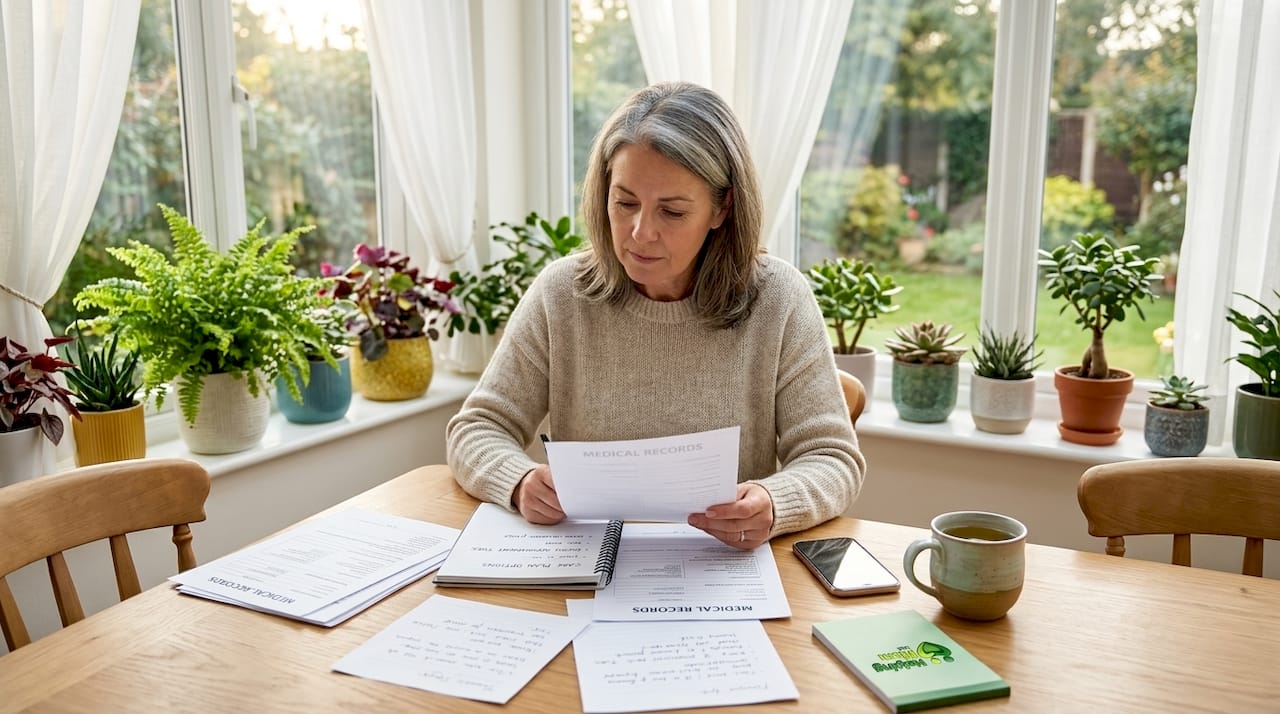
Adult daughter reviewing emergency plan at kitchen table
Most emergencies involving an aging parent are not dramatic. A missed medication. A fall that seems minor at first. A power outage that lasts longer than expected. What turns these situations into crises is often not the event itself, but the lack of a clear plan.
An emergency plan for an aging parent provides caregivers with the information and confidence needed to respond quickly when something unexpected happens. Think of it as a living safety net: one that covers medical details, emergency contacts, evacuation steps, and supply needs in a format anyone can use under pressure. The formal term for this kind of document is a contingency care plan, and elder care specialists consider it a non-negotiable part of aging in place. At Helping Mom, we hear from adult children every week who wish they had built one before a fall, a power outage, or a sudden hospitalization forced them to scramble. This guide walks through exactly what to include and how to build a plan that works in real life.
The most effective elder safety plan is built around one core idea: someone who has never met your parent should be able to pick it up and know exactly what to do. That standard sounds high, but it is the right one. A one-page emergency cheat sheet with routines, contacts, and health details is the primary tool for reducing panic during a crisis.
Start with a single page that captures your parent's current diagnoses, known allergies, primary care provider, and any specialists they see regularly. Include the name and dosage of every medication, including over-the-counter drugs and supplements, because these details matter most when a paramedic or ER nurse is making fast decisions. Keep this list dated so anyone reading it knows whether the information is current.
Include information about any medical equipment your parent uses, including the model, supplier, and backup power requirements if applicable — such as walkers, wheelchairs, oxygen, CPAP machines, or hearing aids.
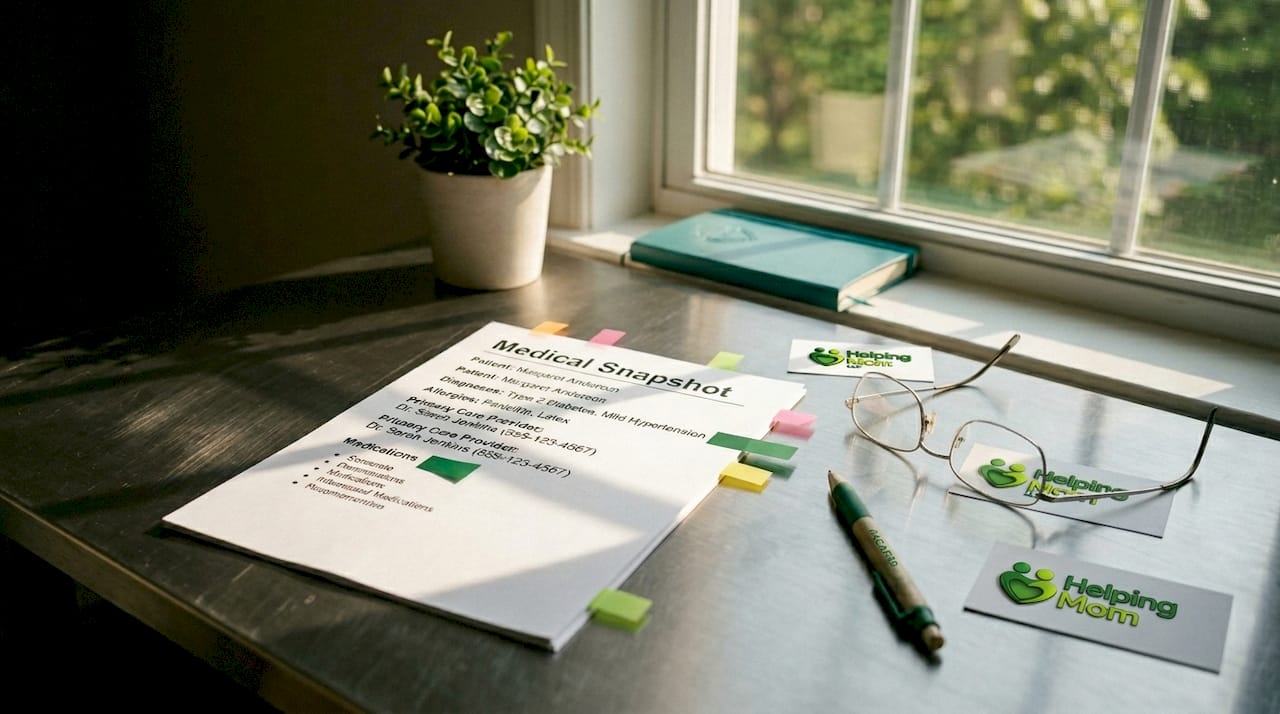
Close-up of medical snapshot document on desk
Advance directives, a healthcare proxy, and a durable power of attorney belong in every senior crisis management plan. Without these documents, family members can face delays in making care decisions during the most stressful moments. Having these documents prepared and accessible ensures that your parent's wishes are respected and that caregivers can act without legal obstacles.
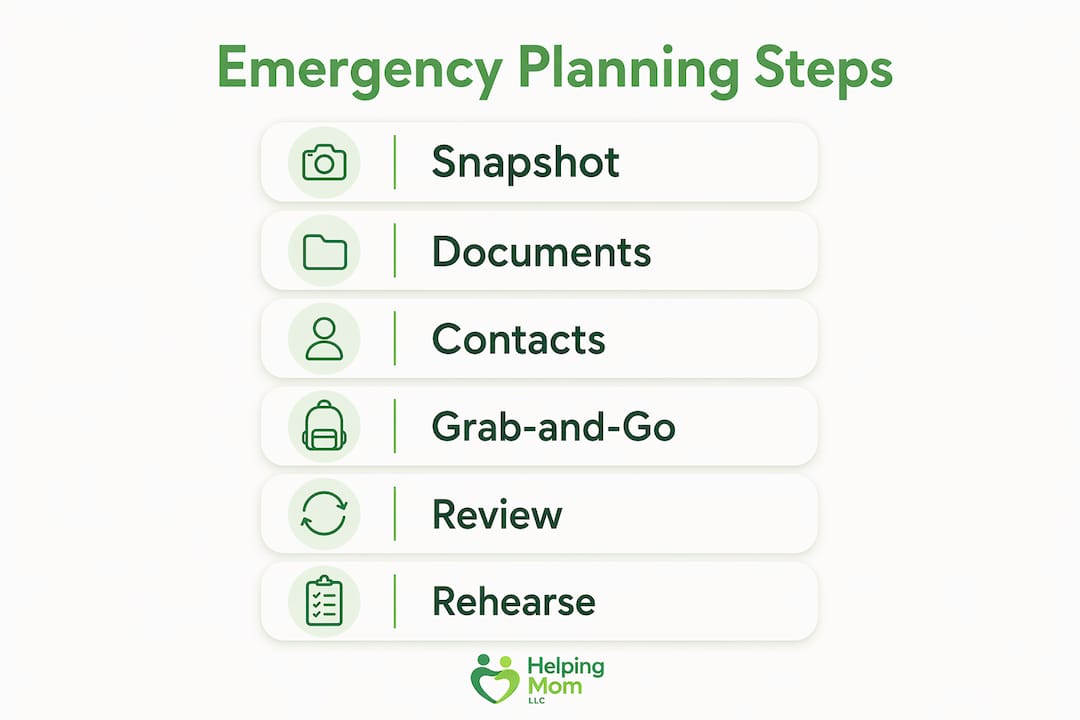
Infographic showing key emergency planning steps
List contacts in priority order: primary caregiver, backup caregiver, neighbor, out-of-town family member, and primary care provider. Note your parent's communication preferences too. Does your parent use a hearing aid? Do they prefer phone calls over texts? Does a language barrier exist with any likely first responder? These small details prevent confusion when time is short.
A well-stocked kit is the physical companion to your written plan. The goal is simple: if your parent needs to leave home quickly, everything critical travels with them. An emergency folder with medical snapshot, contacts, and medications lets caregivers act quickly and confidently without searching for documents under pressure.
Pack a minimum one-week supply of all prescription medications in their original labeled bottles. Add a printed medication list as a backup in case bottles are lost or damaged.
Store copies of the medical snapshot, advance directives, insurance cards, a photo ID, and Medicare or Medicaid information in a waterproof, resealable bag inside the kit.
Include spare hearing aid batteries, a backup pair of glasses, a mobility aid if your parent uses one, and any medical devices such as a blood pressure monitor or glucose meter.
Pack at least three days of non-perishable food and one gallon of water per person per day. Choose foods your parent can eat without cooking and that align with any dietary restrictions.
Add two changes of weather-appropriate clothing, basic hygiene items, and any incontinence supplies your parent uses regularly.
A familiar photograph, a small book, or a favorite snack can reduce anxiety during a stressful displacement. This detail is easy to overlook and genuinely matters.
Review the kit every three months. Rotate medications before they expire, update documents after any health change, and adjust clothing for the coming season. Store the kit in a consistent location your parent and every caregiver knows without thinking.
Clear evacuation and communication procedures are what separate a plan that works from one that sits in a drawer. Approximately 1 in 4 adults aged 65 and older fall every year, and many home emergencies begin with exactly that kind of sudden, disorienting event. Having a rehearsed response removes the guesswork.
Start by identifying the two or three most likely emergency scenarios for your parent's specific situation: a fall, a fire, a severe weather event, or a medical episode. For each scenario, map out the safest exit route from every room your parent uses regularly. Note any mobility challenges that affect which route is realistic, and identify a neighbor or nearby contact who can assist if you are not present.
Regular rehearsals and monthly quick checks keep the plan current and reduce anxiety during actual events. Keep rehearsals short, calm, and positive. Frame them as a walk-through rather than a drill, especially if your parent feels anxious about the topic. The goal is familiarity, not fear.
An emergency plan only works if it can be found quickly. The best plan is one that every caregiver knows how to access — whether they are a family member, a neighbor, or a first responder. Store printed copies in multiple locations and keep a digital backup that can be accessed from anywhere.
The best emergency plan is one everyone can find.
An elder safety plan is only as useful as it is current. Health conditions, medications, living situations, and caregiver availability all change, and the plan needs to reflect those changes in real time. Tracking patterns such as frequent falls or medication errors is more useful than reacting to isolated incidents. This means the plan itself should be a living document, not a one-time project.
Schedule a brief review every month. Check that the medication list is accurate, confirm that all contact phone numbers still work, and verify that the grab-and-go kit has not expired items. Set a calendar reminder so the review becomes a habit rather than something that happens only after a scare.
Hospital Discharge
New Diagnosis
After a Fall
Change in Living Situation
Caregiver Change
Monthly Review
Families often plan funerals but fail to plan for advanced age care, missing ideal windows for discussion like minor falls or milestone birthdays. Those quieter moments are actually the best time to update and revisit the plan together.
When possible, involve your parent in the review process. Asking for their input on what feels safe, what worries them, and what they want respected in an emergency builds trust and often surfaces practical details you would not have thought to ask about. Keep both a printed copy and a digital copy stored in a secure, accessible location such as Google Drive or a password-protected folder shared with key family members.
Most families do not fail at emergency planning because they do not care. They fail because they wait too long, overcomplicate the plan, or leave out the people who need to be involved. Recognizing these patterns early saves a great deal of stress later.
Proactive conversations before a crisis are far more productive than reactive ones. Milestone events like a birthday, a family visit, or a minor health scare are natural openings to start the conversation without it feeling alarming.
A plan with 12 pages and color-coded tabs will not be used under pressure. One clear page with the most critical information beats a binder every time.
Advance directives and power of attorney are not optional extras. Without them, family members may be unable to make care decisions when it matters most.
Caregiver stress is real, and a plan that ignores it is incomplete. Knowing your own limits and having a backup caregiver named in the plan protects everyone. Helping Mom's resources on caregiver well-being address this directly.
If a home health aide, a sibling, and a neighbor all have different information, the plan breaks down. Every person with a caregiving role needs the same current version of the plan.
A well-built emergency plan for an aging parent requires organized medical information, a stocked grab-and-go kit, rehearsed evacuation procedures, and regular updates tied to real health changes.
| Point | Details |
|---|---|
| Start with a one-page cheat sheet | A concise medical and contact summary is the single most useful tool during any crisis. |
| Build a grab-and-go kit | Pack medications, documents, assistive devices, and supplies in a rolling bag stored in a fixed location. |
| Rehearse evacuation routes | Walk through exit routes and communication steps with your parent so the response becomes familiar. |
| Update after every health change | Review the plan monthly and revise immediately after any hospital stay, fall, or new diagnosis. |
| Involve your parent | Including your parent in planning builds trust and surfaces details that improve the plan's accuracy. |
Families often put real effort into building emergency plans that run to multiple pages, include laminated tabs, and cover every conceivable scenario. And then those same plans go unused during an actual emergency because no one could find the right section fast enough. The plans that work are the ones that fit on a single page and live somewhere obvious.
The emotional side of this planning matters just as much as the logistics. When you sit down with your parent to build or update their plan, you are doing something quietly profound. You are telling them that their safety matters, that their preferences will be respected, and that someone has thought ahead on their behalf. That conversation, done calmly and without urgency, often does more for a parent's sense of security than the document itself.
The best time to create an emergency plan is before you think you need one. Families who plan during calm periods are almost always better prepared when an emergency occurs. Milestone events like a birthday visit or a family holiday are natural, low-pressure moments to begin. And if your parent resists, start small. A single index card with three emergency contacts and a medication list is a real plan. Build from there.
— Mike
Helping Mom is built for exactly this kind of planning work. Whether you're just starting to think about your parent's safety or you're updating a plan after a recent health change, the resources here are practical, calm, and designed for real families.
Specific home adjustments that reduce the risk of emergencies most likely to trigger your plan.
Keeping your parent safe and independent at home — the broader picture.
Track every piece of the planning process in one place with this comprehensive checklist.
More resources to help you care for your aging parent
