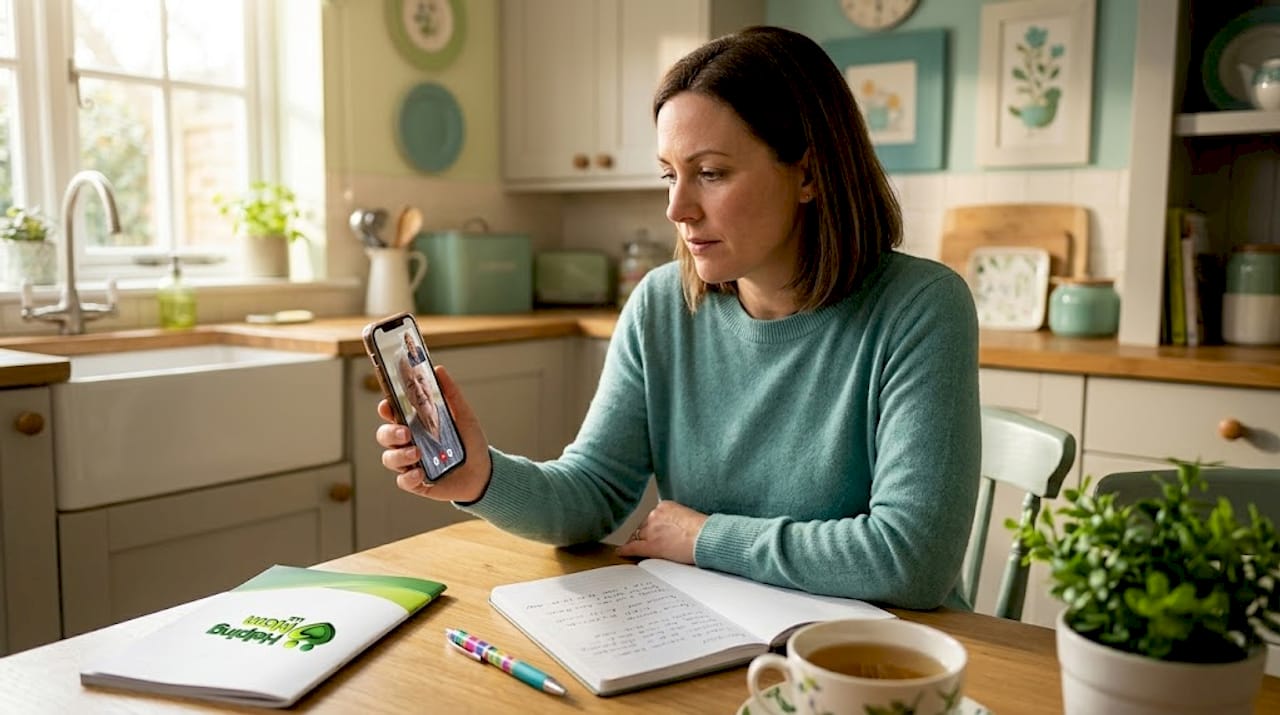
Caring for an aging parent from hundreds of miles away is one of the most emotionally layered roles you can take on. You worry when the phone rings late. You replay the last visit in your mind, wondering if you missed something. Many adult children live with a quiet sense of worry when they cannot physically see how things are going day to day. These long distance caregiving tips are designed to replace that ambient worry with a concrete plan. When you know exactly how you are going to stay connected, monitor safety, and respond in an emergency, something shifts. The worry may never disappear completely, but structure makes it easier to carry. This guide walks you through the most practical remote caregiving strategies available today.
Long-distance caregiving often feels reactive. You wait for updates, worry between phone calls, and wonder whether you are missing something important. The goal is not to eliminate every concern. It is to create enough structure and support that both you and your parent feel more secure.
A daily check-in plus a weekly video call reduces isolation and keeps you informed.
A trusted local network is the single most important asset for long-distance caregivers.
Motion sensors and smart pill dispensers provide useful data without overwhelming your parent.
Use in-person time for safety assessments, medical updates, and sensitive conversations.
Caregiver self-care is not optional. Your own well-being directly affects the quality of care you provide.
The single most disorienting part of supporting elderly from afar is the silence between calls. You do not know if everything is fine or if something small has been quietly getting worse. A communication schedule fixes that.
Experts recommend a daily check-in plus weekly video call as a baseline for reducing caregiver anxiety and maintaining genuine connection. The daily check-in does not need to be long. A two-minute phone call or even a good morning text creates a reliable data point. If your parent does not respond, you know to follow up.
The weekly video call is where you actually see them. You notice if they look tired, if the background looks different, if their speech seems slower. These observations are hard to make over audio alone.
Pro Tip
Assign a specific day and time for your video call and treat it like an appointment. Consistency makes your parent more likely to be ready and engaged, and it gives both of you something to look forward to each week.
A few other habits that help:
When an emergency happens, you do not want to be searching through email threads for your parent's doctor's phone number. A shared caregiving document with all medical, contact, and insurance information improves coordination and makes crisis moments far less chaotic.

This does not need to be complicated. A shared Google Doc or a simple folder in a free cloud service works well. The goal is that anyone in your family or local support network can access it immediately.
Your shared document should include:
Pro Tip
Review and update this document every time you visit. Medications change, doctors change, and contact numbers go stale. A five-minute update during each visit keeps the document genuinely useful.
Designate one family member as the "information keeper" who owns updates to this document. When responsibility is shared without clarity, things get missed.
Building a local support network is arguably the most critical step in all of long distance caregiving. Technology and phone calls cannot replace someone who can physically show up.
Your local network might include a neighbor who checks in a few times a week, a sibling or cousin who lives closer, a member of your parent's faith community, or a professional home aide. The key is that these people know what role they play and have a way to reach you directly.
Be specific when you set expectations with local helpers. "Please call me if you notice anything that seems off" is less useful than "Please call me if Mom skips her Tuesday bridge club or seems confused when you speak with her." Specificity makes it easier for helpers to know when to act.
A few considerations for building this network:
Pro Tip
Involve your parent in building this network. Asking them who they trust and who they would feel comfortable accepting help from respects their autonomy and reduces resistance later.
Involving your aging parent in care planning also reduces your own guilt. When they have a voice in the arrangement, you are walking alongside them rather than deciding for them.
The best remote monitoring technology is the kind your parent barely notices. When systems require active participation from your parent, adoption drops quickly. Passive monitoring tools quietly collect data in the background and only surface an alert when something is actually wrong.
Simple smart home sensors like motion detectors and smart plugs are effective and affordable. A motion sensor near the kitchen that normally sees activity by 9 a.m. can alert you if it detects nothing by noon. A smart plug on the coffee maker tells you whether your parent's morning routine is on track without any effort on their part.
Other useful tools include:
Pro Tip
Start with one or two tools, not six. Too much technology at once leads to confusion and abandonment. A single motion sensor and a medical alert device is a solid starting point for most families.
Effective remote monitoring tech prioritizes simplicity and passivity. The goal is useful data without making your parent feel surveilled or burdened.
Visits are not vacations. They are your most valuable window into your parent's actual day-to-day life, and they deserve some planning before you arrive. Quarterly visits are recommended when your parent's health is stable, with more frequent trips if health declines or a hospitalization occurs.
Before you arrive, make a short list of what you want to observe and accomplish. Walk through the home with a safety lens. A simple room-by-room walkthrough can help you notice risks you may otherwise overlook, especially in bathrooms, hallways, and kitchens — see the bathroom safety guide, fall prevention guide, and home safety checklist for specific things to look for. Check the refrigerator. Look at how medications are stored. Notice how your parent moves through the space and whether anything has changed since your last visit.
Use the visit to connect with local helpers in person. A brief conversation with the neighbor who checks in, or a sit-down with the home aide, gives you a much clearer picture than any phone call can.
Here is a practical structure for a purposeful visit:
Face-to-face conversations during visits are the right setting for discussing legal matters, care preferences, and end-of-life wishes. These topics are simply harder to navigate over video.
Pro Tip
Keep a small emergency "go bag" packed if your parent's health situation is fragile. Knowing you can be on a plane within hours without scrambling for logistics reduces the background dread that many long-distance caregivers carry.
Making sure financial access and durable power of attorney are already in place before an emergency is one of the most caring things you can do. These are not morbid preparations. They are acts of love.
Most long-distance caregiving advice focuses entirely on the parent. This section is for you.
Over 41 million family caregivers in the U.S. are in your situation, and 60% of them are also managing full-time employment. The exhaustion is real, and the guilt is almost universal. Many caregivers also feel torn between their own daily responsibilities and the desire to simply be there more often. If you feel like you are never doing enough, you are not alone. That feeling does not mean you are failing. It means you care deeply.
Therapy can help caregivers process feelings of guilt, resentment, and anxiety in ways that conversation with family members often cannot. An outside perspective from a counselor who understands caregiving dynamics is genuinely useful, not a sign that something is wrong with you.
A shift in mindset also helps. Your role as a long-distance caregiver is not to be physically present for everything. It is to be a coordinator, a communicator, and an advocate. When you build solid systems, you multiply your capacity without burning yourself out.
Connecting with caregiver well-being resources and peer support communities reminds you that this role does not have to be carried alone.
Explore ResourcesI have seen a lot of adult children come to this situation with the belief that if they are not physically there, they are somehow doing it wrong. That belief does more damage than the distance itself.
One thing many families eventually discover is that the caregivers who do best are not the ones who visit most often. They are the ones who build the steadiest systems. A well-organized information document, a reliable local helper, and one good monitoring tool will serve your parent better than a frantic visit every few weeks followed by weeks of anxiety.
I have also seen how much it matters to involve your parent in the plan. When your mom or dad feels like they have a say in who comes to help and how things are arranged, they are more likely to accept support and less likely to hide problems from you. That openness is worth more than any piece of technology.
The guilt you feel is not a sign you are failing. It is a sign you are paying attention. Channel it into building one more system, making one more call, or asking one more local person to be part of the network. That is what actually moves the needle.
— Mike
You do not have to solve long-distance caregiving all at once. Most families build these systems one small step at a time.
If this article has clarified what you need to do next, Helping-mom has the resources to help you take those steps with confidence.
A full home assessment you can use during your next visit or share with a local helper.
Calm, practical support if the emotional weight of caregiving is what feels most pressing right now.
Professional eyes on a home without traveling, with specialists who understand aging in place.
Covers everything from home modifications to family conversations in one place.
Experts recommend quarterly visits when a parent's health is stable, with more frequent trips after a health decline or hospitalization.
Passive tools like motion sensors, smart pill dispensers, and medical alert systems with fall detection are the most practical starting points for most families.
Involving your parent in care decisions and building reliable local support systems both reduce guilt significantly. Therapy is also effective for processing the complex emotions caregiving brings up.
It should cover medical contacts, current medications, insurance details, emergency contacts, and the location of legal documents. Keeping it accessible to all family members prevents confusion during emergencies.
Start by asking your parent who they trust, then speak with neighbors, community members, and their medical providers. A geriatric care manager can fill gaps when family or friends are limited.
