Helping Mom • Article Series
Discover essential tips for kitchen safety for seniors. Reduce risks and create a safer cooking space with practical, low-cost solutions.
TL;DR:
Most of us don't think twice about walking into our own kitchen. We know where everything is, we move without thinking, and we trust our footing.
For an aging parent, though, the kitchen can quietly become one of the most dangerous rooms in the house. Reaching for a coffee mug, carrying a pot of boiling water, or cleaning up a small spill can suddenly carry real risk.
The encouraging news is that creating a safer kitchen usually doesn't require an expensive remodel. A handful of thoughtful changes can make cooking easier, safer, and help your parent stay independent longer.
At its heart, kitchen safety for seniors is about making everyday cooking safer, easier, and more comfortable while helping older adults maintain their independence for as long as possible. Wet floors, overhead reaching, hot surfaces, and poor lighting all create real daily risks. The good news is that most of these hazards respond well to simple, low-cost changes. You don't need to renovate the kitchen — you need to know where to look and what to do first.
Kitchen Safety Checklist for Seniors
You don't have to make every change this weekend. Start with the hazards you notice first. Small improvements made consistently usually matter more than trying to do everything at once.
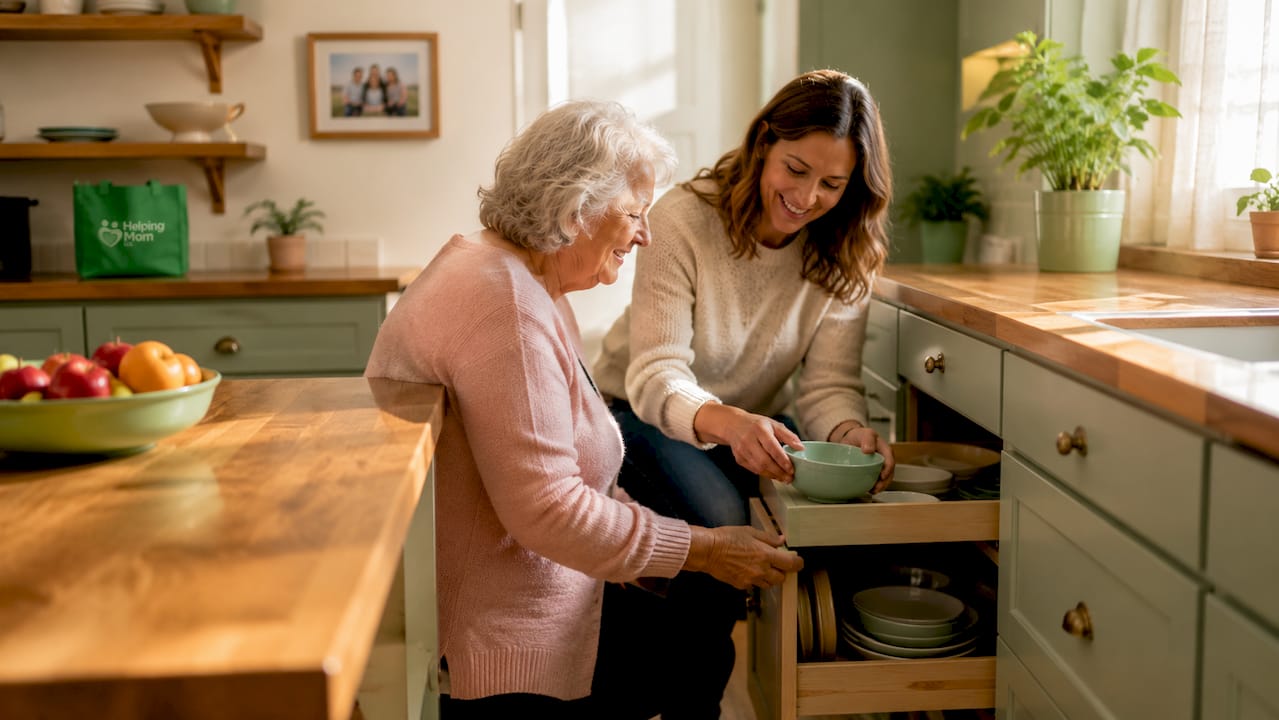
If you're looking for one place to start, reorganizing the cabinets your parent uses every day may be the biggest improvement you can make. The idea is simple — apply the "golden zone" principle. Storing frequently used items between waist and shoulder height eliminates the two most dangerous movements in the kitchen: overhead reaching and deep bending. Both movements shift a person's center of gravity and dramatically increase fall risk, especially for older adults with reduced balance or strength.
Retrofitting cabinets does not require a contractor. Pull-out drawers and lazy Susans fit inside most existing cabinets and cost very little. Moving heavy pots and pans to lower shelves, and placing lightweight cookware at eye level, reduces both the effort and the risk involved in everyday cooking.
Pro Tip: A 20-minute kitchen reorganization, focusing only on the items your parent uses every day, can reduce fall risk immediately without spending a dollar.
Key storage adjustments to make:
Once you've made it easier to reach everyday items, the next priority is preventing slips and falls.
One of the reasons I encourage families to start in the kitchen is simple: falls remain one of the biggest threats to an older adult's independence. Wet floors, loose rugs, and cluttered walkways are responsible for most kitchen spills and tumbles. Keeping the floor dry and clear is the single most impactful habit you can build into your parent's daily routine — and yours when you're there helping.
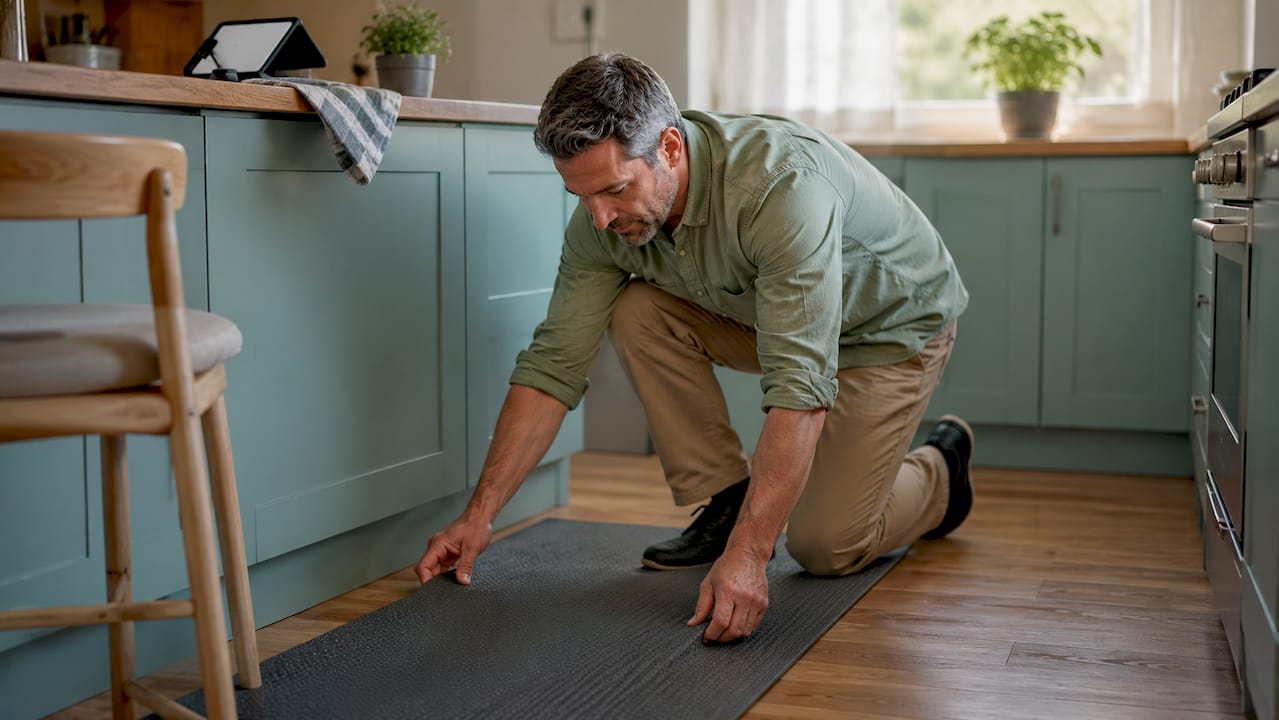
Loose rugs are a hidden danger. They bunch, slide, and catch feet mid-step. Remove them entirely, or replace them with mats that have non-slip backing and beveled edges. Anti-fatigue mats with beveled edges provide stability and reduce muscle fatigue during cooking, but mats that are too thick or have square edges can actually increase fall risk. Thickness and edge design matter as much as the mat itself.
Pro Tip: Look for mats labeled "anti-fatigue" with a beveled perimeter. Avoid decorative kitchen rugs with flat, square edges, even if they have a non-slip label.
Practical fall prevention steps for the kitchen:
Storage and flooring matter, but safe cooking habits are just as important — especially around heat and sharp tools.
Safe cooking practices for elderly adults center on one idea: create distance between the cook and the hazard. Using back burners whenever possible keeps pot handles away from the front of the stove. Turning all pot handles inward prevents accidental knocking. Long-handled utensils, silicone oven mitts that extend to the elbow, and splatter screens all reduce direct contact with heat.
Induction cooktops are worth serious consideration. The surface itself does not get hot; only the cookware heats up. Induction cooktops and appliances with auto-off features make everyday cooking easier and offer real peace of mind for older adults who may forget a burner is on. Many countertop induction units cost under $60 and require no installation.
Sharp knives are actually safer than dull ones. Dull blades increase injury risk for seniors with reduced grip strength or tremors because they require more force, which leads to slipping. A sharp knife cuts cleanly with light pressure. Keeping a knife sharpener in the kitchen and checking blades monthly is a simple habit with real safety payoff.
Pro Tip: Store knives in a countertop block or magnetic strip, never loose in a drawer. A covered blade is a safe blade.
Recommended tools and practices for safer cooking:
Good tools and habits go a long way, but the environment matters too. Let's talk about lighting and technology — two things families often overlook.
Bright, even lighting is a foundational safety measure that most caregivers overlook. High-intensity LED lighting and under-cabinet lights reduce visual fatigue and help older adults see clearly while chopping, reading labels, and navigating the kitchen. Poor lighting turns a manageable task into a guessing game.
Motion-activated lights add an extra layer of safety for nighttime kitchen visits. A senior who wakes up for a glass of water should not have to fumble for a light switch in the dark. Plug-in motion sensor lights under cabinets or along the floor cost very little and install in minutes.
Smart technology rounds out the safety picture. Automatic stove shut-off devices turn off burners after a set period of inactivity. Smart smoke detectors send alerts directly to a caregiver's phone. These tools do not replace good habits, but they do catch the moments when habits slip.
| Safety feature | What it does | Best for |
|---|---|---|
| Under-cabinet LED lights | Illuminates countertops and cutting areas | Daily cooking tasks |
| Motion-activated plug-in lights | Turns on automatically in low light | Nighttime kitchen visits |
| Automatic stove shut-off device | Cuts power to burners after inactivity | Forgetfulness or distraction |
| Smart smoke detector | Sends phone alerts to caregivers | Remote monitoring |
| Induction cooktop | Surface stays cool; only cookware heats | Burn risk reduction |
Technology works best when it complements physical modifications and caregiver support, not when it replaces them. A stove shut-off device is a backup, not a substitute for safe cooking habits.
You don't need to install everything at once. Start with one area — maybe a motion-activated light near the sink — and build from there. Small, thoughtful upgrades often make the biggest difference in creating a safer routine.
Once the physical space feels safer, the next step is often the hardest: having the conversation. Let's talk about how to introduce these changes gently.
The way you introduce safety changes matters as much as the changes themselves. Framing a new cutting board as "something I picked up that makes chopping easier" lands very differently than "I'm worried you're going to hurt yourself." The first invites curiosity. The second invites resistance.
Introducing safety adaptations as supportive help, rather than as control, helps maintain a senior's dignity and confidence in their own kitchen. Your parent has cooked in that kitchen for decades. Respecting that history makes them more likely to accept new tools and arrangements. You can find more guidance on this approach in Helping-mom's aging in place home safety resource.
Practical communication tips for caregivers:
For families working through these conversations together, Helping-mom's guide on planning ahead for senior care offers additional context on respectful, collaborative approaches.
The most effective approach to kitchen safety for seniors combines accessible storage, fall-proof flooring, adaptive tools, better lighting, and respectful caregiver communication.
| Point | Details |
|---|---|
| Apply the golden zone | Store daily-use items between waist and shoulder height to eliminate risky reaching. |
| Choose the right mat | Use beveled-edge, non-slip mats near the sink and stove; avoid thick or square-edged rugs. |
| Keep knives sharp | Sharp blades require less force and reduce slip injuries for seniors with grip challenges. |
| Add lighting and tech | Under-cabinet LEDs and auto shut-off devices reduce accidents without major renovation. |
| Introduce changes gently | Frame safety updates as helpful upgrades and involve your parent in every decision. |
Most caregivers I've seen come to kitchen safety from a place of genuine love, and that's exactly what makes the missteps so understandable. They walk into a parent's kitchen, spot five hazards at once, and want to fix everything that afternoon. I get it. But that approach almost always backfires.
The families who make real, lasting progress are the ones who start with one small change and let it settle. Moving the everyday dishes down to a reachable shelf. Swapping out a worn rug for a proper non-slip mat. These are not dramatic interventions. They are quiet acts of care that add up over time.
What surprises most adult children is how much resistance melts away when a parent feels included. Asking "Would this be easier for you?" instead of "You need to do this" changes the entire dynamic. Your parent's kitchen is their territory. Walking into it with respect, not urgency, is the most practical thing you can do.
The other thing I'd say: do not wait for an accident to prompt action. Small, simple changes in storage and tools boost safety immediately, with low cost and low disruption. You do not need a perfect plan. You need a first step.
— Mike C.
Creating a safer kitchen isn't about taking away your parent's independence. It's about protecting it.
Every cabinet you reorganize, every brighter light you install, and every trip hazard you remove makes it a little easier for your parent to continue doing something many older adults value deeply — preparing their own meals.
You don't have to remodel the kitchen to make a meaningful difference. Start with one improvement this week, then build from there. Over time, those small changes can add up to greater confidence, fewer accidents, and more peace of mind for both of you.
Start with the hazards you notice first. Small improvements made consistently usually matter more than trying to do everything at once.
Helping-mom exists to give adult children clear, calm guidance when caregiving feels complicated. If you are ready to take a closer look at your parent's kitchen and home, the practical home safety guide walks you through the most common hazards room by room with specific, low-cost fixes. You can also use the elderly home safety checklist to do a quick walk-through of your parent's home and spot the changes that matter most. Both resources are free and written for real families, not medical professionals.
Falls caused by wet floors, loose rugs, and overhead reaching are the leading kitchen hazard for older adults. Keeping floors dry and storing daily items at waist-to-shoulder height addresses the most common risks.
Yes. Induction cooktops heat only the cookware, not the surface itself, which significantly reduces burn risk. Models with automatic shut-off features add an extra layer of protection for seniors who may forget a burner is on.
Remove loose rugs, place beveled-edge non-slip mats near the sink and stove, and clear all floor clutter. A 20-minute reorganization that moves daily items into the golden zone can reduce fall risk immediately at no cost.
Cut-resistant gloves, ergonomic-handled knives, electric jar openers, and non-slip cutting boards all reduce strain and injury risk. Sharp knives are safer than dull ones because they require less force to use.
Introduce one change at a time and frame each one as a helpful upgrade rather than a safety restriction. Involving your parent in the decision, such as asking where they would like to move items, reduces resistance and preserves their sense of control.
Elderly Home Safety Checklist for Caregivers | Helping Mom LLC
Making Home Safer for an Elderly Parent | Helping Mom LLC
Home Safety for Elderly Parents: A Practical Guide for Families | Helping Mom LLC
Creating a Safer Home for Your Aging Loved One | Helping Mom LLC
Bathroom Safety for Elderly Parents | Helping Mom LLC
How to Prevent Falls at Home for Aging Parents | Helping Mom LLC