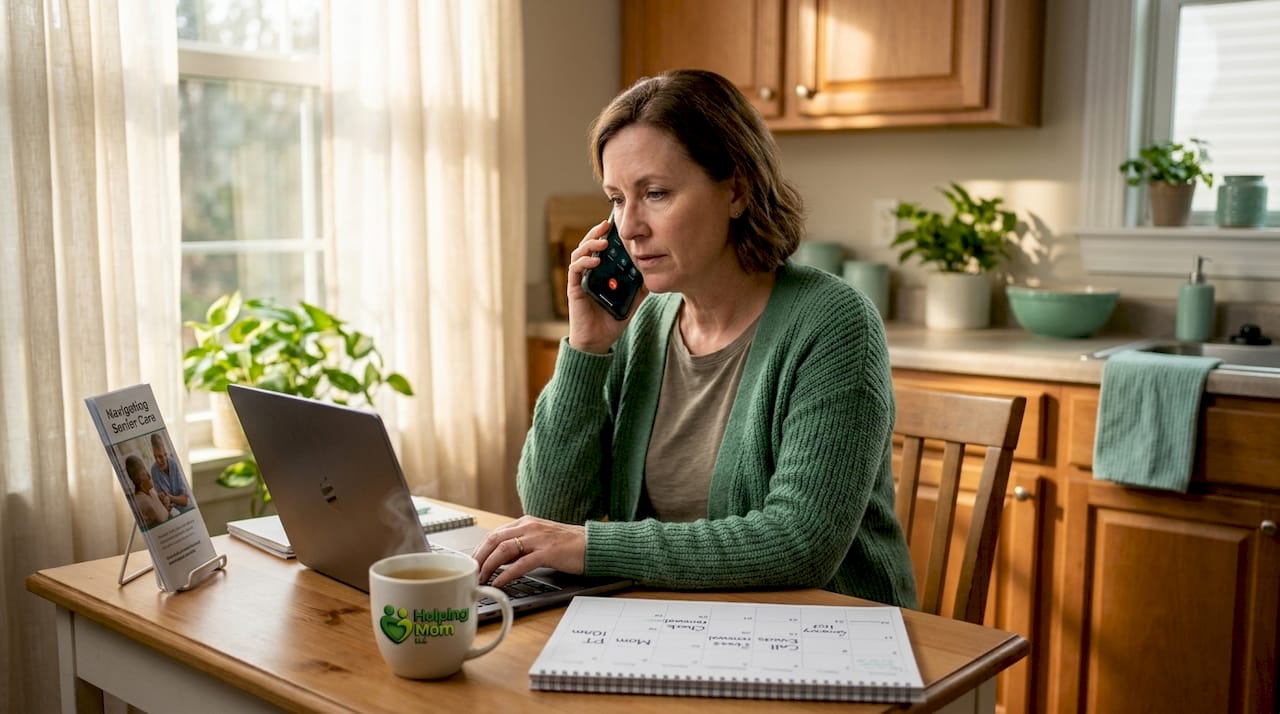
Balancing caregiving with your own life is defined as managing your parent's daily needs alongside your work, relationships, and personal health without sacrificing any one of them entirely. That balance is possible, even if it does not look perfect every day. It requires intentional scheduling, honest communication, and consistent self-care, not perfection.
Whether you are coordinating doctor visits around a full-time job or trying to carve out time for yourself after a long caregiving day, the strategies in this article give you a practical framework to work from. Resources like Banner Health, Harvard Health, and the Family and Medical Leave Act (FMLA) all point to the same truth: sustainable caregiving depends on structure, support, and knowing your limits.
The most effective way to protect your time as a caregiver is to build a structured schedule before the week begins, not after it falls apart. Time-blocking with a daily ratio approach gives you a concrete starting point. Village Some caregivers find it helpful to intentionally reserve time each day for caregiving responsibilities, focused work, and personal recovery, ensuring that no single area consumes all available energy. This is not a rigid formula. It is a mental anchor that prevents any one area from consuming the entire day.
Grouping errands and tasks by location or type saves significant time each week. Instead of driving to the pharmacy on Monday, the grocery store on Wednesday, and the doctor's office on Friday, you batch those trips into one or two outings. Harvard Health recommends grouping errands and scheduling regular respite as two of the most practical ways to reduce caregiver burnout. Fewer transitions mean less mental fatigue.
Digital tools reduce the administrative burden that quietly drains caregivers. Patient portals and apps like MyChart, Google Calendar, and CareZone help you track medications, appointments, and care notes in one place. When your parent's care information is organized and accessible, you spend less time searching and more time present.
If you are coordinating care with siblings or other family members, our guide on family caregiving coordination can help create a clearer plan.
| Tool or method | Best use | Effort to set up |
|---|---|---|
| Google Calendar | Scheduling caregiving, work, and personal blocks | Low |
| CareZone app | Tracking medications, appointments, and care notes | Low |
| MyChart patient portal | Accessing medical records and test results | Low |
| Weekly master list | Assigning tasks to family members by day | Very low |
| 2-2-2 time ratio | Structuring daily hours across caregiving, work, self | None |
Pro Tip
Set a recurring Sunday evening reminder to review the coming week. Fifteen minutes of planning on Sunday prevents three days of reactive scrambling.
Caregiving done alone is caregiving done unsustainably. Honest communication with family about roles and responsibilities is the first step toward sharing the load. That means a real conversation, not a hint or a complaint. Sit down with siblings or other family members, name specific tasks, and ask directly who can take what. Vague requests produce vague commitments. If family members want to help but are not sure where to start, creating clear expectations can make a significant difference.
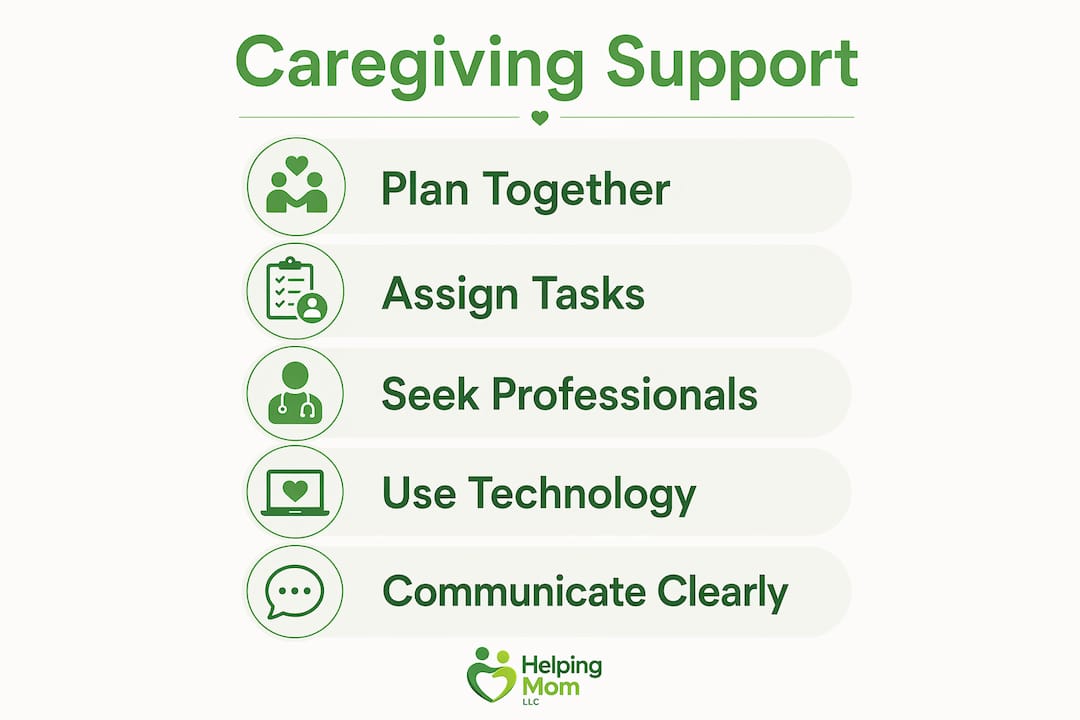
A shared weekly master list is one of the most underused tools in family caregiving. Matching tasks to specific people by name and day reduces the mental overhead of constantly deciding who does what. When your brother knows he handles Tuesday pharmacy pickups and your sister handles Sunday visits, you stop carrying the entire coordination burden in your head.
Professional support options are worth building into your routine before you reach a breaking point. Adult day programs give your parent structured social time and give you uninterrupted hours for work or rest. Respite care services, whether in-home or facility-based, provide temporary relief that prevents caregiver isolation and fatigue. You can explore a full breakdown of these options through Helping Mom's guide on types of caregiver support.
Self-care for caregivers is a practical necessity, not an optional luxury. Harvard Health identifies mindful breathing, yoga, adequate sleep, good nutrition, and support group participation as the core practices that keep caregivers functioning over the long term. When these habits slip, the cumulative cognitive and emotional load of caregiving accelerates burnout faster than most people expect.

Caregiver burnout symptoms include sleep disruption, weight changes, and emotional exhaustion. These are not signs of weakness. They are signals that your system is running on empty. Recognizing them early gives you time to course-correct before the situation becomes a crisis. Helping Mom's guide on recognizing caregiver burnout walks through exactly what these signs look like in daily life.
Micro self-care routines work better than waiting for a free afternoon that never comes. A five-minute breathing exercise before your parent wakes up, a ten-minute walk after lunch, and a consistent bedtime are more sustainable than a monthly spa day. Consistent routines in sleep, nutrition, and breaks prevent the midweek energy collapse that leaves caregivers running on adrenaline by Thursday. CogniCare AI's resource on daily self-care habits offers a practical starting point for building these small routines into your day.
Pro Tip
Treat your self-care time as a non-negotiable appointment. Block it in your calendar the same way you would a doctor visit. If you would not cancel a medical appointment for a minor inconvenience, do not cancel your rest time either.
Social connection is part of self-care, not separate from it. Isolation is one of the fastest paths to caregiver depression. Even a short phone call with a friend, a coffee with a neighbor, or a message in an online support group counts. You do not need hours of free time to stay connected. You need consistency.
Clear communication with your employer about caregiving responsibilities prevents the slow erosion of trust that happens when you go silent and then miss deadlines. Banner Health guidance recommends honest discussions with both family and employers, paired with realistic scheduling that includes protected personal time. You do not need to share every detail. You do need to set clear expectations about your availability.
FMLA is the most significant legal protection available to employed caregivers in the United States. FMLA provides up to 12 weeks of unpaid, job-protected leave per year for eligible employees caring for a parent with a serious health condition. Eligibility requires at least 12 months of employment, 1,250 hours worked in the past year, and an employer with 50 or more employees. That last detail matters. Many caregivers assume they qualify and discover too late that their employer falls below the threshold.
| Workplace support option | What it provides | Key requirement |
|---|---|---|
| FMLA leave | Up to 12 weeks unpaid, job-protected leave | 12+ months employment, 50+ employee company |
| Flexible scheduling | Adjusted hours or remote work options | Employer agreement |
| Employee Assistance Programs (EAPs) | Counseling, referrals, and short-term support | Available through many mid-to-large employers |
| Intermittent FMLA | Leave taken in blocks, not all at once | Same FMLA eligibility criteria |
Setting boundaries at home requires the same directness. Decide in advance which hours are for caregiving and which are not, and communicate those limits to your parent and other family members. Eligibility for legal protections like FMLA significantly shapes your ability to hold those boundaries without fear of job loss. Knowing your rights gives you confidence to have the harder conversations. CogniCare AI's guide on workplace mental health boundaries offers communication scripts that work in both professional and family settings.
Pro Tip
When talking to your manager about caregiving needs, lead with solutions, not problems. "I need to leave by 4 p.m. on Tuesdays for a standing appointment, and I will make up the time on Thursday mornings" lands better than "I have been struggling with my schedule."
Balancing caregiving requires a structure built on realistic scheduling, shared responsibilities, consistent self-care, and clear communication at work and at home.
Time-blocking with a 2-2-2 daily ratio prevents any one role from consuming your entire day.
A named weekly task list for family members reduces mental overhead and prevents isolation.
Small daily habits in sleep, nutrition, and movement sustain caregiver energy over the long term.
FMLA provides up to 12 weeks of job-protected leave for eligible caregivers of aging parents.
Honest conversations with employers and family set realistic expectations before overwhelm sets in.
Over the years, I have noticed a pattern among caregivers who seem to sustain this role without completely losing themselves in it. They do not wait until they are exhausted to ask for help. They build respite into their routine early, before a crisis forces it. That shift in thinking, from respite as a last resort to respite as a regular part of the plan, changes everything. Using respite care early, not only in emergencies, is one of the most protective things you can do for yourself and for your parent.
The caregivers who struggle most are often the ones who try to be invisible about it. They do not tell their employer. They do not tell their siblings. They carry it quietly until something breaks. Transparency is not a sign of weakness. It is the practical move. When your employer knows what you are managing, they can often accommodate you. When your family knows the full picture, they are more likely to step in.
Balancing caregiving is not about getting it perfect every week. Some weeks the schedule falls apart. Some weeks you skip the walk and eat badly and feel it by Friday. What matters is returning to the structure, not abandoning it because one week was hard. The goal is persistence, not perfection. And if you are reading this and feeling behind, that is not a sign you are failing. It is a sign you are paying attention. That matters more than you think.
One lesson I continue to learn myself is that balance is rarely something you achieve once and keep forever. Caregiving changes. Your parent's needs change. Your work responsibilities change. What worked six months ago may not work today. The goal is not finding a perfect system. The goal is continuing to adjust the system as life changes.
You can find more practical guidance on managing caregiver stress at Helping Mom, including strategies for the harder days when the plan does not hold.
— Mike
Helping Mom is built specifically for adult children who are figuring this out in real time. The site covers the practical side of caregiving without the medical jargon or the alarm bells. If you are working on creating a safer home environment for your parent, the senior home safety guide is a hands-on starting point that complements everything you are doing to create a more manageable caregiving routine.
For the emotional and physical side of caregiving, the caregiver well-being resources at Helping Mom offer self-care frameworks, stress management tools, and honest guidance on staying well while caring for someone you love. You do not have to figure all of this out alone.
Need more support?
Explore our full library of caregiver resources and connect with a community that understands.
Explore ResourcesHelping Mom LLC
Helping Mom LLC
Helping Mom LLC
Helping Mom LLC
